| OCR Text |
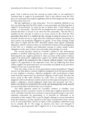
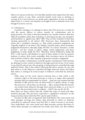
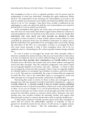
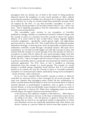
Show Rationality and the Structure of the Self, Volume I: The Humean Conception 307 because I fail to view myself as merely "someone." I may not grasp that 3.4.(1) implicitly refers to me because I am someone; it may be that I regard me as me, and others as "someone." Yet I may have strong feelings of empathy and sympathy toward them, and have a strong sense of their reality. On the one hand, this would be insufficient for impersonal altruism, because these beliefs would lack universality and necessity; but on the other, it would be sufficient to defeat the assumption of solipsism, because it would repudiate the view of others as less real than myself. So it appears that even if my self-conception is of myself as one person among many others, this by itself does not give 3.4.(1) motivational content. Dissociation from the impersonal standpoint does not necessarily mean I recognize no connection to others at all. It may just mean that my selfconception is grounded in emotional responses to others, rather than in my human and spatiotemporal relation to them. However, Nagel strictly needs only the weaker claim, that if one does accept an impersonal standpoint on oneself, this undermines at least the epistemic, if not the ontological presuppositions of solipsism. In this he is surely right. This second interpretation yields another, less happy implication. For although we may agree that impersonal judgments should have the same justificatory force as personal ones, we must also recall that whether or not an agent actually accepts this judgment as a justification must remain an open question which is not decided by the rational content of the judgment, any more than it is by its impersonal formulation. An agent's acceptance of a justification is a first-personal, contingent psychological event, even though the reason that constitutes that justification itself may be embedded in an impersonal, rationally inescapable judgment. And so it now seems clear that it will be possible to raise the same objection about this third stage in the argument that has been raised for the first two: In each case, it seems, it is the dated, first-personal mental event of accepting the reason as a justification that is doing the motivational work, no matter how spatiotemporally neutral or impersonal the rational content of that justification must be. Nagel has not, then, succeeded in rebutting premise 2.2.(1) of the beliefdesire model of motivation. He has not shown that we do not require a present mental event to motivate action. What he has at least suggested is that that mental event need not be a desire. It may be an intentional attitude that is somewhat more susceptible to the persuasive effects of rational content. 3.5. Rational Inescapability and the Kantian Dilemma It remains to be considered whether Nagel's framework contains the resources for actually solving the Kantian dilemma. Is it possible to retain rational, objective and universal reasons for acting, given the contingent and transient motives on which we act? Are beliefs, considerations, recognitions, © Adrian Piper Research Archive Foundation Berlin |