| OCR Text |
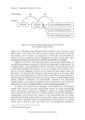
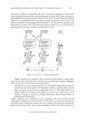
Show Chapter IV. The Utility-Maximizing Model of Rationality: Formal Interpretations 148 axiom (1.2.(a.i), above) that are recognizable using some of the conventional transformations of classical logic: (1) F>G or G>F (2) not-F>G (3) ∴ G>F (4) F>G Completeness the Contra-G Argument (1), (2) the Pro-G Argument (5) ∴ F>G and G>F (6) not-F>G or not G>F (4), (3) (2) (7) not-G>F (6), (4) (8) F>G and not-F>G and G>F and not-G>F Both the pairwise cyclical ordering expressed in (5) and the straightforward logical contradiction expressed in (8) are structural rather than empirical or experimental. Therefore they are not susceptible to Fishburn's analysis of experimental violations of the weak ordering axiom either as "behavior [that] reflect[s] the individual's indecision about which of F and G he prefers" or as a case in which F and G "are 'close enough' that it is not worth his effort to be careful about which he chooses, [in which case] it seems reasonable in an operational sense to say that he is indifferent between 19 F and G." Rather, the individual - and we - are in a state of permanent and necessary indecision about how to classify G in case 1.6.1.(2). I discuss the distinction between such indecision and the indifference relation in Volume II, Chapter III.6.2. We cannot definitively answer the question as to whether G is a live option or not because this question requires a yes-or-no answer, whereas the extent to which it is or not is a matter of degree - which itself is a matter of degree, and so on. Under such circumstances, yes-and-no is the best answer we can give. There is a deeper moral to this story. Allais' experimental result shows, like Tversky and Kahnemann's, among others, that empirical choice behavior may violate what we intuitively view as rational standards of consistent choice. A familiar and understandable response to such counterexamples is to try to protect consistency by imposing further conditions - transitivity, irreflexivity, independence, substitutability, continuity, etc. - on rational choice in order to rule out such counterexamples as instances of irrationality. But it is easily seen that the above argument need be only slightly reconfigured to generate similar structural cyclicities and contradictions for any such condition (I leave this as an exercise to the reader). Thus the same 19 Peter C. Fishburn, "On the Nature of Expected Utility," in Allais and Hagen, op. cit. Note 7, 245. © Adrian Piper Research Archive Foundation Berlin |