| OCR Text |
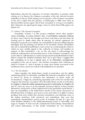
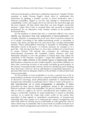
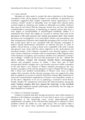
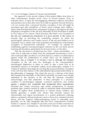
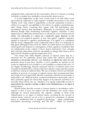
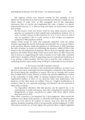
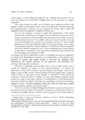
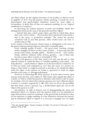
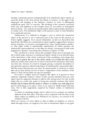
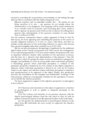
Show Rationality and the Structure of the Self, Volume I: The Humean Conception 131 G ≈ [F(p) or H(1 - p) ]. So, for example, suppose that p = .66. Then G v [F(.66) or H(1 - .66)]. Remember that F = 1 and H = 0. So G ≈ [1(.66) or 0(.33)], i.e. G ≈ (.66). So the expected utility of G for Mabel is .66, or 2/3. If F > H and G = F(p) + H(1 - p), then F > G > H for 0 < p < 1. By assigning a weight of 1 to Mabel's highest-ranked option F and 0 to her lowest-ranked option H, the vN-M method enables us to assign a cardinal value to any option in between them - without Edgeworth's assumption that intervals along individual utility scales are equal for all agents. 1.3. Interpersonal Cardinality The vN-M method enables the construction of a cardinal utility scale. But it does not enable the construction of an interpersonal utility scale. For there is no independent way of locating our respective 1s and 0s relative to one another, nor of determining objectively the unit value of any interval between them. For example, suppose you observe my choice behavior over a broad array of pairwise comparisons. Suppose you then ask me to assign an aggregate numerical value, in increasing order of desirability, to each option chosen, such that each such value is the product of that option's weight for me, multiplied by the probability I assign to achieving it. Assume for now that my choice behavior is transitive and my options complete (these assumptions will be discussed in greater detail later). Suppose I give watching "The Simpsons" a 3, reading Trollope Sr. a 6, and listening to Mozart's "Jupiter" Symphony a 9. Then you could conclude that listening to Mozart's "Jupiter" Symphony was more satisfying to me than the other two, and that reading Trollope Sr. was more satisfying to me than watching "The Simpsons" by certain measurable proportional intervals. This would give us a cardinal ranking of my preferences. But it would not enable us to compare my utility rankings with yours, such that the members of both sets might be assigned objective rankings relative to one another on a single scale. Why not? Because there is no way to rule out the possibility, nor to confirm it, that you express the very same responses towards "The Simpsons," © Adrian Piper Research Archive Foundation Berlin |