| OCR Text |
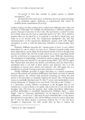
Show Rationality and the Structure of the Self, Volume I: The Humean Conception 153 Now we have just seen that in the move from (A1) to (A2), Ramsey replaces the indifference relation between (iii) and (iv) that defines equality of value intervals FG and HI relative to an ethically neutral toss-up belief s with an equivalence relation that enables him to derive similarly equal value intervals relative to a second ethically neutral toss-up belief t with which s is, as regards content and degree of belief, interchangeable. This move deserves further scrutiny. Indifference between (iii) and (iv) was stipulated to be a sufficient condition for the equality of the value intervals of ranked total outcomes FG and HI. However, indifference is an intensional relation between two complex objects of value, whereas equivalence is an extensional relation between two complex sentences or propositions. To say that I am indifferent between (iii) and (iv) is to say that it does not matter to my preference ranking of F, G, H, and I whether s is true or false. This is what enables us to infer the equality of value intervals FG and HI. By contrast, to say that (iii) and (iv) are equivalent is to say that (iii) is a necessary and sufficient condition for (iv), i.e. that the truth of s secures F and its falsity secures I if and only if the truth of s secures G and its falsity secures H. From this it follows that the truth of s secures F if and only if it secures G; and that its falsity secures I if and only if it secures H. To see this, use the Boolean connectives under their conventional interpretation in classical logic, and assume for purposes of this argument that F, G, H, I, J, and K can be interpreted as symbolizing not outcomes but rather sentences or propositions describing outcomes. Then (iii) becomes (iii") (s F) . (~s I) and (iv) becomes (iv") (s G) . (~s H). Then (A2) becomes (A2') [(s F) . (~s I) ≡ (s G) . (~s H)] ⇒ [(t F) . (~t I) ≡ (t G) . (~t H)]. The antecedent of (A2') can be rewritten as (A2'a) [(s F) ≡ (s G)] . [(~s I) ≡ (~s H)]. This makes the truth of s a sufficient condition for F if and only if it is a sufficient condition for G, and its falsity a sufficient condition for H if and only if it is a sufficient condition for I. But it does not show that the difference in value between F and G is the same as the difference in value between H © Adrian Piper Research Archive Foundation Berlin |