| OCR Text |
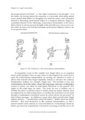
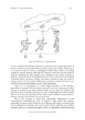
Show Chapter IV. The Utility-Maximizing Model of Rationality: Formal Interpretations 174 therefore, was an unavoidable consequence of their intertemporal logical inconsistency. But logically inconsistent preferences are psychologically inconsistent as well. Recall that Winifred fell into psychological inconsistency only at t3, when her selection of H over F produced a cyclical ordering. This selection ensured that there could be no subset of pairwise comparisons that contained at least one selected alternative in common. But this psychological inconsistency was the consequence of failing to apply consistently the CGP to the alternatives presented. Failure to apply this concept, and the consequent absence of a common selected alternative, also accounted for Wallace's learning problem, i.e. his difficulty in inductively generalizing to this concept. We have seen that in order to form and consistently apply such a concept to one's selections among alternatives, those selections must be psychologically consistent. But the selection of one alternative in common to two pairwise comparisons implies the consistent application of the concept of a most preferred alternative, i.e. of a genuine preference, on both trials. So an agent's selections are psychologically consistent if and only if they are intertemporally logically consistent. Nonvacuous utility-maximization presupposes the subordination of (T) to the requirement of logical consistency expressed in the concept of a genuine preference. Suppose an agent in fact ranks F highest at t1 if and only if she ranks F lowest at t3; Cleopatra's swift and lethal disposal of her nightly 41 suitors in Theophile Gautier's tale might illustrate such a case. Here any particular suitor is most preferred at night if and only if he is least preferred the following morning. This sort of arrangement detaches Cleopatra's love life from the integrated continuity of the rest of her life. While she may integrate her practice of lethal one-night stands into her life, she cannot integrate any love relationships into it. For she fails to develop and experience the depth and intensity of emotion that accompany prolonged engagement with a romantic other. Her present feelings and responses will tend to harden into stereotypes, because they are of the kind elicited only by the earlier, formulaic stages of courtship and never by the later, more individuated ones she has chosen to forego. After many repetitions of an initially novel or exciting experience, these responses may tend to become gestural or perfunctory, or so highly refined that their meaning evaporates - not only because of their repetitive character, but more importantly because she has chosen to foreclose to those responses an open-ended future. In thus voluntarily constraining their object, duration, and course of development, Cleopatra constrains in advance the range of significance and consequences they can have for her, 41 Theophile Gautier, "The Nights of Cleopatra," in Mademoiselle de Maupin (New York: Modern Library, 1949). © Adrian Piper Research Archive Foundation Berlin |