| OCR Text |
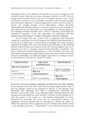
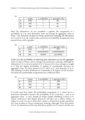
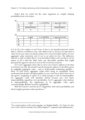
Show Rationality and the Structure of the Self, Volume I: The Humean Conception 141 guarantee the admissibility of Allais assignments to preference rankings also generate cyclicities that structurally violate all of the von NeumannMorgenstern axioms, and by implication several others. From this conclusion I infer that imposing upon an agent's ranking any such normative axioms of choice fails to exclude cyclicities; and that these structural inconsistencies hasten the conclusion to (U)'s vacuity. Sections 2 and 3 below detail the close connections between cyclicity and vacuity; and Volume II, Chapter III both exposes their logical relationship (essentially, the relationship between selfcontradiction and tautology); and also proposes a way to avoid both. 1.6.1. Aggregate Value and the Sorites Paradox The argument is grounded in an implicit tension between the concepts of preference and probability. The concept of a consistent preference ordering implicitly presupposes observation of the all-or-nothing law of noncontradiction as understood in predicate logic - the principle of bivalence, as vagueness theorists call it; whereas weight and probability assignments to projected outcomes presuppose a linear mathematical progression. Some simple examples show how these two sets of presuppositions may conflict. Consider first a series of cases in which an agent must choose among three simple, weighted tidy sum-alternatives F, G, and H, such that in each case the three consistently weighted alternatives receive different probability assignments relative to the others. An infinitesimal probability assignment or incremental difference in probability assignment may reduce a consistently weighted alternative's aggregate value so much that it becomes a nonalternative for that agent. The gradient metamorphosis of an alternative into a non-alternative generates a sorites paradox that thereby creates an inconsistency in the set of alternatives available to him, and therefore in the choices he makes as a consequence. For example, suppose Percy must choose among F = $100, G = $90, and H = $80; and that Percy chooses in accordance with (U), such that this choice satisfies completeness and transitivity (vN-M's 1.2.(a) i. and ii., above). Then F 14 > G, G > H, and F > H. Now consider the following three sets of probability assignments to F, G, and H, and their effect on the aggregate value to Percy of each alternative. In the first, we assume that each alternative is a sure thing: 14 We can ignore the distinction between monetary worth and its intrinsic or marginal value for purposes of this example. © Adrian Piper Research Archive Foundation Berlin |