| OCR Text |
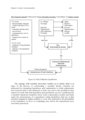
Show Rationality and the Structure of the Self, Volume I: The Humean Conception 55 the orthodox view, is unintelligible to the Tabwa. There are no ontologically basic events in their experience that answer to our orthodox conception of a desire. Perhaps we could eventually get a Tabwan to "recognize" the existence of such events, by schooling him in our linguistic conventions, and convincing him to accept the resulting reconceptualization of his experience as valid, in the way that B. F. Farrell has documented for the indoctrination of psychoanalytic concepts.9 But in this case we would merely have won him over to our side. We would not have demonstrated that our side has any greater claim to objective accuracy than his from an unbiased perspective. The Tabwa constitute a counterexample to the revisionist interpretation of the belief-desire model of motivation. But they also afford interesting insight into the genesis of desire on the orthodox model. They suggest that desires as identifiable empirical events may be the effect of social and linguistic conditioning, and are not necessarily to be found in its absence. In Sections 2 and 3 below, I detail the extent to which we buy into this conditioning, in the hope that the resulting unflattering portrait may inspire us to sell out of it. At this point it is tempting to respond by insisting that all agents have desires, even if they don't know what their desires are, or even what a desire is; and to set about trying to prove these claims by showing that their behavior can be explained by postulating the existence of unconscious or unrecognized desires. I argue in Chapter III that the closer we come to demonstrating the ubiquity of desire as a motive for behavior, the closer we come to a blanket metaphorical description of behavior that leaves far behind any pretense of explaining it. If we cannot distinguish between ontological but contingent desires and other motivationally effective causes of action, we cannot be said to have an independent concept of motivation at all. 1.3. Lewis's Revisionism To see this, consider next David Lewis' revisionist suggestion for solving the problem of radical interpretation, defined as follows: How do we come to know Karl himself - his beliefs, desires, and meanings, as expressed in his language, and also as we might express them in ours, given the physical facts about Karl?10 Lewis sets up the problem by assuming all the data yielded by Karl as a physical system P, and then devising a way to fill in the information about Karl's beliefs and desires as expressed in our language Ao, as expressed in Karl's language Ak, and the meanings or truth-conditions of his full sentences M, given certain constraints. Lewis describes these constraints as "the fundamental principles of our general theory of persons. They tell us how B. A. Farrell, "The Criteria for a Psychoanalytic Explanation," in D. Gustafson, Ed. Philosophical Psychology (New York: Doubleday, Inc., 1964). 10 David Lewis, "Radical Interpretation," Synthese 23 (1974): 331-44. Reprinted in Philosophical Papers, Volume I (New York: Oxford University Press, 1983), pp. 108-121. 9 © Adrian Piper Research Archive Foundation Berlin |