| OCR Text |
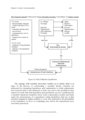
Show Chapter II. The Belief-Desire Model of Motivation 58 (5) A Manifestation Principle constrains the relation between P and Ak, and also Ao, by stipulating that Karl's beliefs, as expressed in his own language, ordinarily should be manifest in his dispositions to speech behavior; i.e. Karl is assumed to be truthful, honest, and to possess integrity of thought with utterance. Lewis acknowledges the difficulty of stating a companion Manifestation Principle of the desires in Ak, but suggests that there probably should be one; we shall return to this difficulty momentarily. (6) A Triangle Principle constrains the three-way relation among Ao, M, and Ak, by requiring that Karl's beliefs and desires come out the same whether expressed in his language or ours. Lewis' preferred method for solving the problem of radical interpretation, as he has stated it, has three steps: The first step is to use P as a source of information on Karl's behavior and life history of evidence to fill in Ao, by means of the Rationalization and Charity principles. The second step is to use Ao as a source of information about those of Karl's attitudes pertaining to speech behavior to fill in M, in conformity with the Truthfulness and Generativity Principles. The third step is to use Ao and M to fill in Ak, by means of the Triangle Principle. The satisfaction of the Manifestation Principle then follows automatically from that of the Truthfulness, Rationalization, and Triangle Principles, and so is redundant. But Lewis' solution to the problem of radical interpretation suffers on account of his adherence to the revisionist variant of the desire model of motivation. First, recall the status of the theory of persons of which the six constraining principles are constitutive. They are, by hypothesis, systematizations of our commonsense views on the empirical interrelations of belief, desire, and meaning in most people. As we have just seen in considering the Tabwa of West Africa, this hypothesis by itself is controversial. The problem with the Principle of Charity is its presupposition of the belief-desire model in the first place. Despite Lewis' stipulation of V in (1), this model leaves no room for basic intrinsic values, because it locates the source of value in individual and subjective desires. Individual desires held by different subjects at different times may fortuitously coincide in conferring value on some common state of affairs, such as food or shelter, with some degree of statistical regularity - on which its value is contingent. But its intrinsic value would require that its value be self-conferring (this is what the word "intrinsic" means), not by its statistical occurrence as an object of subjective desire. But when we examine the statistical occurrence of various states of affairs in the subjective desires of various individuals, we see that not only are the resulting values not intrinsic; they are, for the most part, not even held in common. It is far from obvious that, for example, the Principle of Charity © Adrian Piper Research Archive Foundation Berlin |