| OCR Text |
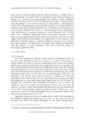
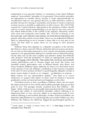
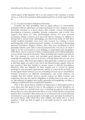
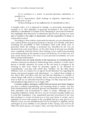
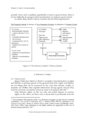
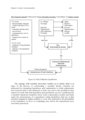
Show Rationality and the Structure of the Self, Volume I: The Humean Conception 429 perspective of justice; such a rupture cannot exist between the possession and enjoyment of goods (56). Habermas thus offers a counterpart to Marx's critique of traditional Social Contract Theory, that rights are empty, merely juridical concepts without the fair distribution of economic resources that gives them meaning. Similarly, Habermas faults Rawls for reifying juridical concepts that are just as empty and meaningless without practical and concrete opportunities for their exercise. As is true for Marx, such opportunities presuppose the material and social means to do so. In this respect there is an asymmetry between rights and goods that, Habermas argues, Rawls fails to acknowledge. Furthermore, Habermas reproaches Rawls at the metaethical level, for having effectively conflated the distinction between teleological values and deontological norms by conceiving of rights and liberties as goods. Norms, Habermas argues, guide action decisions, impose obligations, express behavioral expectations, make binary claims of validity or invalidity, are impartial in their application to agents, and must be mutually coherent. Values, by contrast, guide outcome choices, offer arrays of particular objects of preference, express purposive ends, require ordinal rankings, are culturally or subjectively conditioned, and compete for priority. To sum up, norms differ from values, first, in their relation to rulegoverned as opposed to purposive action; second, in a binary as opposed to a gradual coding of the respective validity claims; third, in their absolute as opposed to relative bindingness; and last, in the criteria that systems of norms as opposed to systems of values must satisfy (55). Rawls, Habermas thinks, ignores these distinctions by assimilating rights and liberties into the decision theorist's pairwise comparisons among preference alternatives. However, from Rawls's stipulation of rights and liberties as objects of preference along with other goods, it does not follow that he disregards these deep structural differences between them, any more than it would follow from my having to choose between darning a sock and reading a book that I disregarded the structural differences between them. We have already seen in Chapter IV that it is both a blessing and a curse that canonical decision theory can reify any state of affairs that can be an object of desire into a preference alternative. And surely rights and liberties can be objects of desire. Habermas is right to call attention to the important difference between those primary goods which can be enjoyed merely by being owned and those which can be enjoyed only by being exercised. This distinction assumes increasing significance as the primary goods are gradually distributed by the two principles of justice under the four-stage sequence. But we can see in Figure 12 above that Rawls does, in fact, make provision for this distinction in the primary goods that each principle of justice distributes: rights and liberties are distributed specifically by the first, Millian principle that stipulates that the © Adrian Piper Research Archive Foundation Berlin |