| OCR Text |
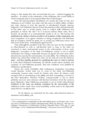
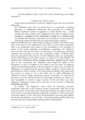
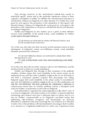
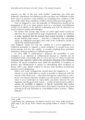
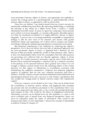
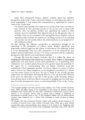
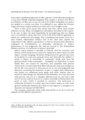
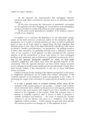
Show Chapter IV. The Utility-Maximizing Model of Rationality: Formal Interpretations 138 (5) S = S(g1, g2, … , gn, p1, p2, …, pn), Allais proposes a function of cardinal preference (6) S = S(g1, g2, … , gn, p1, p2, …, pn), "which," he claims, "in the field of the economic psychology of risk, is the equivalent of the Fechner-Weber functions expressing psychophysiological sensation as a function of excitation (44)." Note that Allais is claiming that formula (6) is the equivalent, in economic choice under conditions of risk, of Fechner's (1) and (2), above, in the psychology of physiological stimulation. He is not merely claiming that they are related, or analogous. Nor is he claiming merely that there is some correspondence between them. He is claiming that they are equivalent. However, he does not show in what the equivalence consists. What remains is, first, to explain the relevance of this seemingly anachronistic psychological theory to the construction of a cardinal utility scale. Second, the sense in which its laws are equivalent to (6) is also in need of clarification. Without this, a convincing case even for the existence of a single subject's cardinal utility scale, much less for the possible of comparing such scales interpersonally, has not been made. 1.5. The Allais Paradox Allais grounds his rejection of the vN-M method in the view that an individual subject must be asked to introspect on her subjective, phenomenological response to alternative gambles with weights and subjective probabilities that differ radically in some cases and very minimally in others. He shows that the outcome of this experimental procedure generates real life counterexamples to the vN-M independence condition (E.2.(b), above), and therefore uncovers inconsistencies in rational choice that undermine its universal scope. Now the vN-M axioms were not intended to be universal in scope. As we will shortly see, it is true that the assignment of huge weights, infinitesimal probabilities, or minute incremental differences to preference alternatives can in some cases produce counterexamples to the vN-M axioms. But Morgenstern rightly protests that the method is not designed to extend to 11 such extreme cases. In Section 1.6 following, however, I argue that there is in theory no way of ruling out such cases; and that their necessary inclusion sabotages the attempt to exclude cyclical rankings through the imposition of normative requirements such as transitivity, irreflexivity, or independence. 11 See Oskar Morgenstern, "Some Reflections on Utility," Allais and Hagen, op. cit. Note 7, esp. 178. © Adrian Piper Research Archive Foundation Berlin |