| OCR Text |
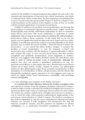
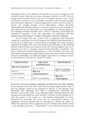
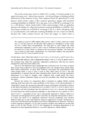
Show Chapter IV. The Utility-Maximizing Model of Rationality: Formal Interpretations 130 (a) Weak Ordering: '>' is complete and transitive, i.e. (i) for any F, G in S either F > G or G > F; and (ii) if F > G and G>H then F>H; (b) Independence: if F > G and 0 < p < 1 then F(p) + H(1 - p) > G(p) + H(1 - p) for any H in S; (c) Continuity: if F > G and G > H then F(p) + H(1 - p) > G and G > F(p') + H(1 - p') for some real numbers p and p' between zero and 1. The method consists, roughly, in two steps. The first is to arbitrarily assign weights of 1 and 0 to two alternatives F and H. The second is to then determine the expected utility to the agent of the third alternative G by finding the lottery of F and H that is indifferent to G, under the assumption that the agent's preference ordering of F, G and H satisfies constraints (a) - (c). So we first assume the agent's ranking of F, G and H: F > G, G > H, F > H. Then we assign a weight of 1 to F and 0 to H, and try to find the expected utility of G for the agent. We do this by constructing a choice situation for him: Either he will definitely get G - call this the certain option; or else he will get either F with a subjective probability of (p) or H with a probability of (1-p) - call this the lottery option. Otherwise represented, the choice situation for that agent is G or [F(p) or H(1 - p)]. For example, suppose p = .95 for Mabel. Then (1 - p) = .05. So Mabel's choice is between G for certain on the one hand, and a 95% probability of F and a 5% probability of H on the other. Since Mabel has ranked F highest and the probability of F is awfully close to a sure thing, Mabel should choose the lottery option. On the other hand, what if p = .05 and (1 - p), correspondingly, = .95? In this case Mabel's choice is between G for certain on the one hand, and, on the other, only a 5% probability of Mabel's highest-ranked option - F - and a 95% probability of Mabel's lowest-ranked option - H. In this case it would be more prudent for Mabel to choose the certain option - G. In general, as p changes from 1 to 0, Mabel's preference for the lottery option becomes a preference for the certain option because as her probability of getting her highest-ranked option decreases, the attractiveness to her of the certain option increases. Now suppose there is a point at which Mabel is indifferent between the certain and the lottery options, i.e. © Adrian Piper Research Archive Foundation Berlin |