| OCR Text |
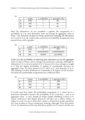
Show Rationality and the Structure of the Self, Volume I: The Humean Conception 71 This case makes it easy to see how desire on this analysis is distinct from pleasure. I argue at greater length in Chapter VI that desire-satisfaction is not necessarily pleasurable; and indeed - contra Brandt and Kim, that desiresatisfaction and pleasure are entirely independent of each other. A feeling of pleasure is a reaction to a stimulus that causes in one feelings of sensory and/or emotional well-being, happiness, ecstasy, or joy. In one for whom a sense of wholeness and sufficiency is lacking, a pleasureable stimulus can create in one a desire for those feelings, under the misapprehension that these feelings will restore to one a sense of wholeness and sufficiency. But clearly, these two sets of responses are similarly independent of one another, and often not even contingently conjoined. It is possible to experience simultaneously feelings of wellbeing, happiness, ecstasy, and joy on the one hand; and feelings of insufficiency and deprivation on the other. Indeed, some accounts of religious ecstasy postulate a necessary connection between it and a belief in one's own insufficiency. In this case the feeling of pleasure may be inflected by feelings of being undeserving or presumptuous or base; or by anxieties about future pain, punishment or retribution; or by unexpected revelations of one's value or entitlement to pleasure, etc. Or it may be simply and straightforwardly unsatisfying, as too much sugar, sex, socializing, or status often is. There is no real mystery as to how such things (to name only a few) can give both pleasure and dissatisfaction simultaneously. The more important and less obvious point is that any object of desire may fail to give pleasure, and any pleasure may fail even momentarily to satisfy desire. 2.2. A Representational Analysis of Aversion Next consider aversion. Somewhat analogously to desire, an aversion can be representationally analyzed as follows: (a') S has R1' of O such that R1' represents O as overloading S; (b') S has R2' of O such that R2' represents S as overloaded by O; (c') R1' and R2' conjointly cause S to feel overstimulation, repulsion, disgust, apprehension, fear, and/or pain with regard to O; (d') S has R3' of S, such that R3' represents S's obtainment or achievement of O as causing S's wholeness and sufficiency to be attacked, threatened, invaded, overwhelmed and/or undermined by O; (e') R3' causes S to anticipate feeling discontent, anxiety, insecurity, and craving for the eradication of O. (f) S has R4 of S, such that R4 represents S's eradication of O as causing S to be restored to wholeness and sufficiency; (g) R4 causes S to anticipate feeling satisfaction, gratification, security, self-sufficiency, and/or fulfillment. © Adrian Piper Research Archive Foundation Berlin |