| OCR Text |
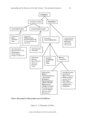
Show Rationality and the Structure of the Self, Volume I: The Humean Conception 311 neither does take motivational and evaluative precedence within the self, the problems of self-evaluation and moral paralysis will not have been solved, but rather exacerbated. Bernard Williams offers a different bipartite conception of the self to solve Frankfurt's problem, one that also consists in reason and desire as independent sources of motivation within the self. But Williams' variant stipulates exactly the reverse order of priorities from Watson's: that motivational and evaluative precedence is to be accorded those central desires he calls "ground projects," to which considerations of transpersonal rationality are subservient. Williams' demotion of transpersonal rationality is buttressed by Michael Slote's defense of pure time preference, the principle that we should give highest priority to those desires and ends that happen to have the closest temporal proximity to us. Both views assign to such desires and ends the moral importance that substantive criteria for rational final ends would confer. Williams then argues that to sacrifice these desires to the requirements of impersonal moral principle is to alienate oneself from those commitments and attachments that are most deeply expressive and definitive of the self. But detailed scrutiny of Williams' and Slote's claims strongly suggest that they, too, beg both the question of which source in fact has motivational and evaluative precedence within the self, and the normative question of which source should have it. A personal commitment to rational and impartial moral principles not only does not imply moral alienation; the ability to formulate ground projects, goals, and personal attachments presupposes it. Hence Williams' concept of a centrally definitive ground project does not displace the need for substantive criteria of rationality according to which those ground projects can be reflectively evaluated; and Slote's defense of pure time preference provides no such independent criterion of evaluation. The problem of rational final ends remains unresolved within the constraints of the Humean conception of the self. 1. The Structural Model In the utility-maximizing model of rationality, desires structure the self in 1 two ways. First, through the distinction into first- and second-order desires, 1 See Harry Frankfurt, "Freedom of the Will and the Concept of a Person," The Journal of Philosophy LXVIII, 1 (January 1971), 5-20. Frankfurt's main thesis is similar to Wright Neely's apparently independent treatment in "Freedom and Desire," The Philosophical Review LXXXXIII, 1 (January 1974), 32-54. Although Neely emphasizes the contrast between the ordinary sense of "desire" as one motive to action among many and the extended philosophical sense that includes all such motives to action, he makes it equally clear that the advantage of the philosophical sense is that it implies means for analyzing all the multifarious motives for the action in terms of "desire" in something like the ordinary sense. Thus he seems to © Adrian Piper Research Archive Foundation Berlin |