| OCR Text |
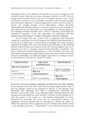
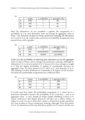
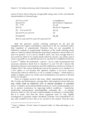
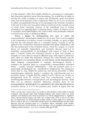
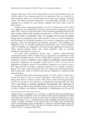
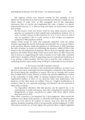
Show Rationality and the Structure of the Self, Volume I: The Humean Conception 139 Second, the force of Allais' experimental counterexample does not depend on his phenomenological interpretation of (U). The case presents an agent with two sets of compound gambles. In (1), the agent is presented with a choice between F and G, such that (1) F = $500,000 with a probability of 1 (the "sure thing"); and G = ◊$2,500,000 with a probability of .10, or ◊$500,000 with a probability of .89, or ◊$0 with a probability of .01. In this case, the agent prefers F to G. In (2), the agent is presented with a choice between H and I, such that (2) H = ◊$500,000 with a probability of .11, or ◊$0 with a probability of .89; and I = ◊$2,500,000 with a probability of .10, or ◊$0 with a probability of .9. Here the agent prefers I to H. So she prefers a certain tidy sum to an unlikely jackpot, but an equally unlikely jackpot to an only slightly less unlikely tidy sum. That is, she chooses the risk-averse option in case (1), but the riskier option in case (2). We can see the dilemma by parsing the payoffs in 12 thousands as follows: (1) F G .89 [E1] $500 $500 .01 [E2] 500 0 .10 [E3] 500 2500 H 0 500 500 I 0 0 2500 (2) By partitioning E1 and (E2 or E3), we see that options F and H have identical payoffs under E2 and E3, as do options G and I. According to the independence axiom, if F is preferred to G, then (500,p; 500 1 - p) is preferred to (0, p; 2500, 1 - p). But then H should be preferred to I. Substituting 0 for $500 under E1 should make no difference. But Allais' experiment shows that most subjects prefer I to H because although the probability of winning is almost identical in both gambles - 11% in H, 10% in I, the payoff in I is much 12 Here I am grateful to Ned McClennen. © Adrian Piper Research Archive Foundation Berlin |