| OCR Text |
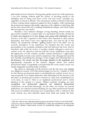
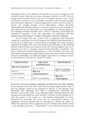
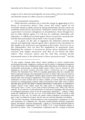
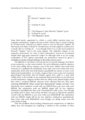
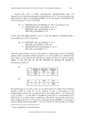
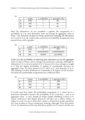
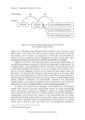
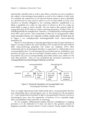
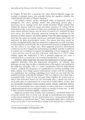
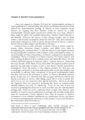
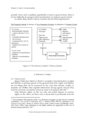
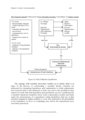
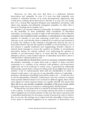
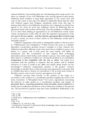
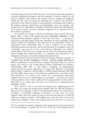
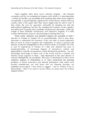
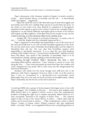
Show Chapter V. A Refutation of Anscombe's Thesis 216 intrinsically valuable ends as well as any others, and they can serve equally as the subject of deontological prescription as well as the content of final ends. For example, the expression of our rational human nature is just as plausible as a desired end we may wish to achieve as it is as that which we may view ourselves as directly obligated to do; reaching reflective equilibrium is as likely a candidate for a state we may strive to achieve as it is for a duty we must fulfill as part of action morally. We can express this general truth by saying that those CPVs that are value-conferring properties of other CPVs are indistinguishable in metaphysical structure, or metaphysically indistinguishable, from other such carriers. Any constraints on their use or arrangements within some normative theory are a function of their content alone. So final ends (2) in Figure 3 are metaphysically indistinguishable from value-conferring properties (3). But if it is characteristic of deontological theories that (1)-type elements in Figure 2 occupy position (2), and if (2)-type CPVs would not be such without their value-conferring properties (3), which are similarly CPVs, then relationship (β) in deontological theories is equivalent to relationship (α) in consequentialist ones. For deontologically prescribed actions, institutions, and practices ((1)=(2)) are only provisionally valuable relative to the further CPVs (in position (3)), just as consequentially prescribed actions are, relative to the ends they promote. Thus we can adumbrate the structural equivalence of consequentialist and deontological theories as follows: relationship: element: consequentialist: (α ) (1) act(ivity) (2) CPV (=final end) deontological: (β) (1) (= (2)) act(ivity) (=final end) (3) CPV (=valueconferring property) Figure 5. Structural Equivalence of Consequentialist and Deontological Normative Theories Here we might characterize both relationship (α) in consequentialist theories and relationship (β) in deontological ones as "provisional on the promotion of." I omit independent treatment of (β) in consequentialist theories and (α) in deontological ones, since the arguments of Sections 3.1-3.a conjointly imply their susceptibility to the same line of reasoning. So, for example, Utilitarianism implies that the commitment to keeping promises is to be abdicated if it does not lead to the greatest amount of happiness possible, whereas Rawls's Social Contract Theory implies that the © Adrian Piper Research Archive Foundation Berlin |