| OCR Text |
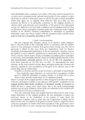
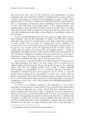
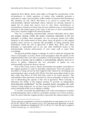
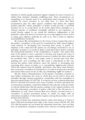
Show Rationality and the Structure of the Self, Volume I: The Humean Conception 185 testing does this. I discuss this distinction at greater length in Chapter V.2, below. Now it may seem that a moral theory like Kant's is value-laden in both of these respects, whereas as utility theory is value-laden in neither. First, the value-conferring part of Kant's moral theory mentions certain values, such as autonomy, freedom, trustworthiness, and beneficence. These are the values that, according to Kant, guide the behavior of a perfectly rational being. In this respect, Kant's concept of a perfectly rational being is comparable to what 56 Weber calls an ideal type of Wertrationalität. Second, the action-guiding part of Kant's moral theory promotes these values, in so far as it offers us a regulative ideal to which to aspire in our conduct. By contrast, some would say that the concept of fully rational economic man in Neoclassical economics - roughly Weber's ideal type of Zweckrationalität - is value-laden in neither of these senses, or at least is so to a much lesser degree. First, it does not claim to mention any values; on the contrary. (U) purports to describe value-neutrally an agent who pursues whatever values she has efficiently. Second, since (U) purports to express the basic principle of an explanatory social theory, it appears to promote only the value of computational rationality itself. These two reasons alone have been invoked to justify ascribing to the concept of utility-maximization that special, logically necessary and therefore value-neutral status in the concept of rational action which, it is claimed, even Kant himself conceded. I do not believe Kant conceded this, although I shall not defend this belief here. But I have tried to show in the preceding sections of this discussion that the concept of utility-maximization or efficiency itself is a fully contingent value an agent may rationally choose to reject in favor of some competing alternative. Among the competing alternatives from which an agent may choose are to be found the values that load a moral theory such as Kant's: autonomy, respect, beneficence, trustworthiness, and so on. That Kant's moral theory, and the values that define it, compete with utility theory and the values that define it, is uncontroversial: Values like trustworthiness versus efficiency, duty versus self-interest, beneficence versus personal satisfaction continually vie for importance and for our attention, and present us with familiar conflicts both in theory and in practice. The two theories that respectively contain these values are not significantly different in regulative 57 or valuational status, as some social theorists have sought to argue. If this is 56 ibid. Weber represents the reasoning of the Zweckrationalität advocate about Wertrationalität particularly clearly: "From the [Zweckrationalität] point of view, ... absolute values are always irrational. Indeed, the more the value to which action is oriented is elevated to the status of an absolute value, the more 'irrational' in this sense the corresponding action is. For, the more unconditionally the actor devotes himself to this value for its 57 © Adrian Piper Research Archive Foundation Berlin |