| OCR Text |
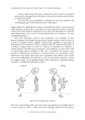
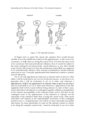
Show Chapter I. General Introduction to the Project: The Enterprise of Socratic Metaethics 28 The project of moral communication has not only to do with letting others know what we think, but also trying to command their acknowledgement that we are right. Those of us committed to the Socratic ideal prefer to command this acknowledgment through rational dialogue rather than emotional rhetoric, dissimulation, psychological manipulation, or threats of professional or social rewards withheld or punishments inflicted for dissenting. That is, we do our best to "live as one who would wish to be Socrates," rather than as a Bulldozer, Bully, Überbully, Bull, or Bullfinch. By relying on the force of rational dialogue to win agreement with our moral convictions, we try to command not only others' assent, but also their intellectual respect. In rational discussion, analysis and argument, we reach beyond the circle of the converted to try and convert the unconvinced. We express respect for the transpersonally rational capacity of the unconverted by appealing to it, rather than to their emotional, psychological or social vulnerabilities, to convince them. And we receive the best confirmation of the truth of our moral convictions when others are rationally convinced, rather than manipulated or coerced or deceived, into adopting them. Call this the enterprise of Socratic metaethics. Socratic metaethics grounds moral convictions and judgments in the Socratic ideal of rational dialogue as a means for arriving at moral truth. Within the enterprise of Socratic metaethics, there are many ways to proceed. One that has a long historical pedigree is what I shall call Humean Anti-Rationalism, because it takes its inspiration from the authoritative status Hume assigns to desire and the passions in justifying moral action.10 In earlier historical periods this approach emerged variously in normative theories such as Intuitionism or the Moral Sentiment Theory of the British Moralists. (Similarly, Virtue Theory claims allegiance to Aristotle, but on extremely shaky exegetical grounds). As developed in the early twentieth century philosophy of Sir David Ross, Intuitionism stipulates the existence of an innate faculty of moral intuition, consultation of which tells us what moral principles we ought to follow in action.11 Prominent late twentieth century Humean Anti-Rationalists such as Annette Baier, Lawrence Blum, Michael Stocker, or Susan Wolf harken back to British Moralists such as Shaftesbury, Hutcheson, or directly to the Hume of Book III of the Treatise, by repudiating the governing role of moral principle and instead appealing to moral emotion or sentiment to guide action.12 Similarly, the Noncognitivism of Allan This is Thomas Nagel's term to characterize variants on the same group of views I discuss here. See his The Possibility of Altruism (Oxford: Oxford University Press, 1975), 8. I devote Chapter VII in Volume I to study of this work. 11 Sir David Ross, The Right and the Good (Oxford: Clarendon Press, 1938). 12 Annette Baier, Moral Prejudices (Cambridge: Harvard University Press, 1994); Lawrence Blum, Friendship, Altruism and Morality (Boston: Routledge and Kegan Paul, 1980); Michael Stocker, Valuing Emotions (New York: Cambridge University Press, 10 © Adrian Piper Research Archive Foundation Berlin |