| OCR Text |
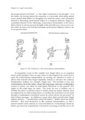
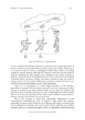
Show Chapter XI. Brandt's Instrumentalism 484 each of multiple outcomes of each action alternative. "Evidently," Brandt remarks, there is a problem about simultaneous adequate representation of the various features or elements of the alternatives, an inability to get everything adequately, or even equally, before the mind at the same time (76). Essentially Brandt reasons that we should try to do our best - "try to get the outcomes and their probabilities, as vividly (and equally) before the mind as possible," but that we "necessarily depart from ideal 'rationality' because of this finite capacity of our minds" (78). He quotes R. N. Shepard's observation that "[a]fter a choice of this kind has been made, the decision maker sometimes comes to the realization that this particular choice was not the best 6 even by his own subjective standards." The difficulty is the same as before. Lacking any further criterion of "adequate representation" of the alternatives, we are free to conclude that those elements that failed to inform our decision were therefore demonstrably irrelevant to it. Of course in retrospect, with the benefit of hindsight and the experience of consequences, we may evaluate the alternatives differently. But what was relevant at the time was what causally affected our decision. If information available at that time did not affect it at that time, then it was not relevant at that time. This general conclusion also applies to the desires and pleasures Brandt claims we would not have if we had all the relevant and available information. Brandt claims that certain beliefs and thoughts that contribute to the formation of desires are incompatible with relevant and available information, and therefore that those desires and pleasures themselves are irrational (89). According to Brandt, we learn to desire things in three ways. First there is classical conditioning. Beginning with an innately pleasant (or unpleasant) stimulus to which we respond, that experience is then associated with a neutral experience; we then learn to respond to the originally neutral experience as we did to the innately pleasant stimulus. Then there is direct conditioning, in which the thought of an originally pleasant experience is repeatedly paired with an unpleasant stimulus, and so generates withdrawal. Both kinds of conditioning are examples of contiguity conditioning, in which we learn to desire something because of its contiguity to something we already desire. Finally, there is what Brandt calls the principle of stimulus generalization, i.e. that if we have learned to like a certain thing, we will also like things similar to it, and will like them more the more similar they are. 6 Shepard, R. N., "On Subjectively Optimum Selections Among Multi-Attribute Alternatives," in M. W. Shelley and G. L. Bryan, Eds. Human Judgments and Optimality (New York: John Wiley and Sons, 1964), 257-81. © Adrian Piper Research Archive Foundation Berlin |