| OCR Text |
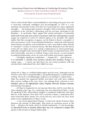
Show Chapter VII. Nagel's Internalism 306 Nagel rightly argues that if the impersonal judgment is supposed not to be motivationally effective, whereas it becomes so with the addition of the personal premise, then since the reason or justification for the action is contained in the impersonal judgment, it cannot be that impersonal reason or justification that is doing the motivational work. This would be what he calls practical solipsism, "[f]or it means that an essential aspect of the first-person judgment, namely the acceptance of a justification, is not present in the impersonal correlate of the same judgment" (113). There are at least two ways in which this last inference can be interpreted. On one interpretation of it, Nagel is considering the case in which the impersonal judgment that one has reason to act does not, after all, despite his earlier claim (65) include its own acceptance as a justification. This seems right, for we have just seen that once an agent agrees that she has a reason for action, she must then be able to evaluate the force of that reason based on her assessment of its merits. Not even the most rational judgment can be thought to be rationally inescapable in the sense of compelling one's acceptance of it as a justification by its content. Since the reason is a propositional object whereas its acceptance as a justification is a psychological event, it is not even clear what it would mean to attempt this. A stronger interpretation, however, would have Nagel observing that to say that the impersonal judgment has no motivational content, or is not motivationally effective, is, in effect, to say that it has no justificatory force at all; that the reason that is its content is not capable of inspiring an agent to accept it as a justification and hence to act on it. And this immediately invites the question, which Nagel himself asks rhetorically, of where this justificatory force could then possibly come from. So we can provisionally agree with Nagel's inference, if this second interpretation is the correct one, that unless the impersonal correlate of the first-personal judgment is supposed to have the same justificatory force, the result must be an irrational and solipsistic dissociation from the rational content of judgments that locate one in the world as one person among many. But does dissociation from the impersonal standpoint strictly imply solipsism itself? Why not just the sort of externalism expressed in the two following assertions? (1) Someone really ought to clean up the garbage in this neighborhood. (2) That someone is me. I might fervently believe 3.4.(1) without its motivating me to act, unless it is accompanied by a belief in 3.4.(2), such that my belief in 3.4.(1) alone contains no motivational content for me. In this case I could make such assertions from the impersonal point of view without their having such motivational content, © Adrian Piper Research Archive Foundation Berlin |