| OCR Text |
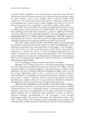
Show Chapter XI. Brandt's Instrumentalism 482 Indeed, Brandt's account of the motivational efficacy of cognitive psychotherapy would seem to require that desire drop out of the motivational chain in some cases. For first, if facts and logic can eliminate some desires from the set of motivationally efficacious variables, then facts and logic can cause me to refrain from performing some actions, namely those caused by the eliminated desires, such that this absence itself may contribute to the satisfaction of my future desires. For example, suppose, at age 20, I know that when I am 60 I will be in great fear of dying from lung cancer, but that 60 is too far away for me to worry too much about that now. If facts and logic can now extinguish my overwhelming present desire to start smoking cigarettes, they thereby can now causally contribute to the satisfaction of my future desire not to die of cancer. In this case the causal variables that explain my refraining from smoking now are facts and logic alone, not desire. Second, if facts and logic can extinguish all but one present desire, leaving only that one to be motivationally effective, then they play a causal role in generating that one surviving rational desire as motivationally overriding. If facts and logic cause that desire to be motivationally overriding, and that motivationally overriding desire causes me to ensure the satisfaction of my future desires, then again, by transitivity, facts and logic cause me to ensure the satisfaction of my future desires. For example, suppose I know, at age 16, that when I am 45 I will, unless I act now, deeply regret not having finished my high school education now. Also suppose that facts and logic eliminate my desires to do all the things that would interfere with that goal, leaving only a knowledge of my future desire to have finished my high school education now, the future satisfaction of which I therefore now ensure. I then reach the age of 45 and look back with satisfaction and gratitude on my clear thinking and prudential course of action at 16. I thereby satisfy at age 16 my future desire at age 45 to have finished my high school education at age 16. Surely it would be odd to deny that facts and logic had, not only a motivating role, but indeed an overwhelming and necessary motivating role in ensuring the present satisfaction of my future desire to have finished my high school education at age 16, relative to which my present desire to do so played an insignificant role. Indeed, it would not be inaccurate to maintain that facts and logic, rather than my desires, were ultimately causally responsible for ensuring the satisfaction of this future desire. It would seem that Brandt's Kantian conception of cognitive psychotherapy interferes with his allegiance to the Humean model of motivation more often than not. 6. Irrational Desire Brandt argues that certain actions - hence net action-tendencies, hence occurrent thoughts of the instrumentality of those actions - can be identified © Adrian Piper Research Archive Foundation Berlin |