| OCR Text |
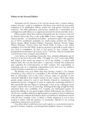
Show Chapter XIV. Hume's Metaethics 590 contingent circumstances that generate them. However, the distortive effect of these circumstances is partially corrected by the operations of the calm passions, which are often mistaken for reason. Let us now examine this account more closely. I treat Hume's principles of variability in this section, leaving his principles of stability for Section 5. Finally, in Section 6, I again recur to and dispose of the general argument that claims that Hume does, in effect, impose rational constraints on ends. In the Treatise, Hume enumerates the principles falling into the first category in greater detail: (a) We are more inclined to pursue a good when it is near to us than when it is remote, because the nearer it is the more violent the passion it causes, and we are more easily impelled to action by violent than by calm passions (T 319; also 427-34). (b) Similarly, we are more strongly impelled to pursue or avoid an object about which we experience conflicting passions than we would be otherwise, for these increase the intensity of the predominating passion we feel toward it (T 421). (c) Uncertainty in the apprehension or prospects of realizing the object, on the other hand, tends to increase our enthusiasm for it much as security tends to replace enthusiasm with boredom (T 421-22). (d) Custom and repetition in the performance of certain actions can transform the accompanying violent passion into a calm one. For they give rise to a facility in performing the action. On the one hand, this facility is an additional source of pleasure (up to a certain point) that motivates us to repeat the action. On the other hand, repetition transforms the action into a settled habit of conduct we perform without feeling intensely motivated to do so (T 422-4; cf. 426). (e) Finally, our imagination increases our pleasurable anticipation of achieving some object, insofar as our prior experience of it enhances our conception of it, as does our memory of it (T 424-6). These are most prominent among Hume's principles of variability. In a significant passage in the Enquiry, to which I shall recur, Hume summarizes these circumstances when he maintains that when some of these objects approach nearer to us, or acquire the advantages of favorable lights and positions, which catch the heart or imagination; our general resolutions are frequently confounded, a small enjoyment preferred, and lasting shame and sorrow entailed upon us (E 239; cf. T 536). © Adrian Piper Research Archive Foundation Berlin |