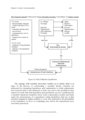
| OCR Text |
Show Rationality and the Structure of the Self, Volume I: The Humean Conception 411 Section 1 grounds the type of justification I want to discuss in Rawls's early and very ambitious "Outline of a Decision Procedure for Ethics," 4 in which he explicitly sets his sights on a conception of moral justification analogous to scientific explanation. Section 2 offers a general description of the basic features that identify traditional Social Contract Theory. Section 3 situates Rawls's central metaethical and normative views within that context, and Section 4 examines and refutes some of Habermas' criticisms of Rawls's normative and metaethical theories. Section 5 reevaluates what Rawls's metaethical approach to moral justification can achieve relative to the analogy of scientific justification on which it is based, with particular reference to Rawls's threefold distinction among perfect, imperfect and pure procedural justice. Section 6 traces the evidence in Rawls's work for the continuity thesis, and its use by some early critics of A Theory of Justice. Section 7 analyzes the Humean and Instrumentalist underpinnings of Rawls's views, and the quite serious contradiction in Rawls's conception of the original position that these assumptions generate. Section 8 considers the resources within Rawls's view for resolving this contradiction and thereby answering his early critics. Section 9 extends the metaphysical implications of this alternative interpretation of the original position to a resolution of the question of personal identity, and also reconsiders the potential of wide reflective equilibrium to provide an alternative to the Instrumentalist strategy of justification. Section 10 spells out the alternative conception of justification as analogous to scientific procedure that the concept of wide reflective equilibrium entails, and concludes with some observations about how Rawls might finally deploy this concept to satisfy the stringent requirements of moral justification which he set for himself in 1951. 1. The Analogy with Science In 1951 John Rawls expressed these convictions about the fundamental issues in metaethics: [T]he objectivity or the subjectivity of moral knowledge turns, not on the question whether ideal value entities exist or whether moral judgments are caused by emotions or whether there is a variety of moral codes the world over, but simply on the question: does there exist a reasonable method for validating and invalidating given or proposed moral rules and those decisions made on the basis of them? For to say of scientific knowledge that it is objective is to say that the propositions expressed therein may be evidenced to be true by a reasonable and reliable method, that is, by the rules and procedures of what we may call "inductive logic"; John Rawls, "Outline of a Decision Procedure for Ethics," Philosophical Review 66 (1951), 177-197; reprinted in Ethics, Ed. Judith J. Thomson and Gerald Dworkin (New York: Harper and Row, 1968), 48-70. 4 © Adrian Piper Research Archive Foundation Berlin |