| OCR Text |
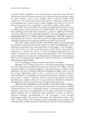
Show Rationality and the Structure of the Self, Volume I: The Humean Conception 155 (A3') is not valid even as an empirical generalization, much less as an axiom. For example, (A3') is violated by my indifference between cherries and apples and between apples and peaches, but strong preference for peaches over cherries. Moreover, there is no way to translate (A3') into the straightforwardly extensional notation of sentential logic that would preserve the transitive structure of (A3'). Letting P symbolize the sentence, "A is indifferent to B," and Q symbolize "B is indifferent to C," the most we can get out of (A3') sententially is (A3") If P and Q, then R, which is less than helpful. Since the plausibility of (A4) depends on the suspect transition from (A1) to (A2), it, too, remains suspect. Ramsey's conception of transitivity as spelled out in (A3) and (A4) looks as first glance to be quite innocent, and logically unproblematic. But in both axioms it surreptitiously combines intensional and extensional elements that turn out to be incompatible. Because this conception of transitivity works only by ignoring these underlying incompatibilities, I describe it as sub-logical. It would seem that Ramsey was stuck between a rock and a hard place: either respect intensionality and sacrifice consistency; or ignore intensionality and reap the benefits of sub-logical transitivity. One such benefit was an extensional equivalence relation that obscured not only the intensionality of choice, but thereby the irreducible subjectivity of the chooser - the two persisting obstacles to interpersonal comparisons that, as we saw in Section 1.3, were not circumvented by stipulating that preferences are revealed in behavior. In their absence a cardinal utility scale could be fashioned that might be thought to have extensional application, and so measure the utilitymaximization of more than one subject. The price of Ramsey's sub-logical conception of transitivity, however, was the replacement of the primitive notions of preference and utility-maximization he originally set out to axiomatize with an extensional equivalence relation that obtains merely between sentences. Next I show why this Faustian bargain does not circumvent the charge of vacuity. 2.3. Vacuity and Cyclicity We have just seen that Ramsey's proof presupposes the truth of (U), i.e. that an agent "will act so that what he believes to be the total consequences of his action will be the best possible." We have also seen that the suspect replacement of the indifference relation with the equivalence relation in the move from axiom (A1) to (A2) calls into question whether Ramsey's axioms do, in fact, impose consistency constraints on bona fide preference rankings; or whether, instead, they merely impose such constraints on the sub-logical relations among extensional sentences that may or may not assert such © Adrian Piper Research Archive Foundation Berlin |