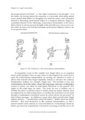
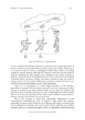
| OCR Text |
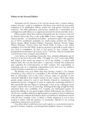
Show Rationality and the Structure of the Self, Volume I: The Humean Conception 575 instincts, affection, and desire.12 This conclusion is recognizable as Hume's negative utility-maximization thesis. As with Hume, this negative thesis is buttressed by Hutcheson's answer to the question, [A]re there no exciting reasons, even previous to any ends, moving us to propose one end rather than another? To this Aristotle long ago answered that 'there are ultimate ends desired without a view to anything else.' To subordinate ends those reasons or truths excite, which show them to be conducive to the ultimate end, and show one object to be more effectual than another; thus subordinate ends may be called reasonable. But as to these ultimate ends, to suppose exciting reasons for them, would infer that there is no ultimate end, but that we desire one thing for another in an infinite series.13 Here Hutcheson does not mean to deny that we are motivated to achieve final ends. Rather, he is denying that we are motivated by rational considerations to achieve those ends. His point is that reason plays no role in the choice of final ends. Furthermore, reason does play a role in investigating and determining the most effectual subordinate ends, i.e. means to those final ends.14 This view is recognizable as Hume's positive utility-maximization thesis. Thus Hume's task was twofold. First, it was necessary to clearly delineate the actual scope and limits of reason, in order to demonstrate conclusively the conviction he shared with Hutcheson and John Clarke that no truth of reason could of itself incite an agent to action, much less moral action. Second, Hume had to provide a positive and detailed account of the passions in order to show just what the true origins and motives of moral action actually were. These enterprises form most of the subject matter of Books II and III of the Treatise of Human Nature, and account for his adherence to both the positive and the negative utility-maximization thesis. For it is of course significant that both Hume and his ally Hutcheson assume almost without a second thought the truth of the negative utilitymaximization thesis as an argument supporting their convictions about This point is supported, and not undermined, as Kydd seems to think (op. cit., 39-40), by his later assertion that He acts reasonably, who considers the various actions in his power, and forms true opinions of their tendencies; and then chooses to do that which will obtain the highest degree of that to which the instincts of his nature incline him (ibid. 126). 13 ibid., 123. 14 Cf. Note 17 and also ibid., 115-16, where he describes reason as the "sagacity in prosecuting any end," and as the finding of means to promote both the public and private good. 12 © Adrian Piper Research Archive Foundation Berlin |