| OCR Text |
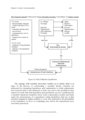
Show Rationality and the Structure of the Self, Volume I: The Humean Conception 57 life. It is very hard to see how any such connection between beliefs and desires could be a necessary one - at least not without begging several important questions.13 Lewis' general theory of persons in "Radical Interpretation" both implicitly defines the key theoretical terms of "belief," "desire," and "meaning," and also deploys them "to make an empirical claim about human beings - a claim so well confirmed that we take it quite for granted"(111). The definition of a person's system of belief, desire, and meaning requires that that system must more or less conform to the principles of the theory. The empirical claim this theory makes is that most human beings in fact have systems of belief, desire, and meaning that conform to the principles of the theory. Since the concepts of belief, desire, and meaning are common property, Lewis reasons, the theory that implicitly defines them "had better ... amount to nothing more than a mass of platitudes of common sense, ... on pain of changing the subject" (112). Thus Lewis, like Goldman, wants to claim both ubiquity and ontological primacy for his concept of desire. What makes him a revisionist, however, is his acknowledgment that belief-desire talk is primarily a theoryladen convention - a convention laden with a universalistic theory. The constraining principles of Lewis' general theory of persons are as follows. (1) A Principle of Charity constrains the relation between Ao and P such that Karl is represented as believing and desiring what we would believe and desire, were we in his place, given the existence of a common inductive method I and underlying system of basic intrinsic values V, respectively. (2) A Rationalization Principle also constrains the relation between Ao and P: The beliefs and desires ascribed to Karl by Ao should allow us to interpret the gross physical behavior given by P as maximizing Karl's utility - which Lewis takes to be equivalent to an interpretation of his behavior as rational. "Thus if it is in P that Karl's arm goes up at a certain time, Ao should ascribe beliefs and desires according to which it is a good thing for his arm to go up then" (113). (3) A Principle of Truthfulness constrains the relation between Ao and M such that the beliefs and desires ascribed to Karl by Ao should preserve the truthfulness of Karl's utterances in his language Ak. (4) A Principle of Generativity constrains the assignment by M of truth conditions to the sentences of Karl's language Ak to that which is finitely specifiable, reasonably uniform and simple, and conforms to a set of standardized semantic and syntactic rules. Michael Stocker takes up these questions in his "Desiring the Bad: An Essay in Moral Psychology," The Journal of Philosophy LXXVI, 12 (December 1979), 738-753. 13 © Adrian Piper Research Archive Foundation Berlin |