| OCR Text |
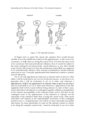
Show Rationality and the Structure of the Self, Volume I: The Humean Conception 593 succeed in correcting the waywardness and partiality of our feelings through behavior that is consistent with this stable and general view: [R]eason requires such an impartial conduct, but ... 'tis seldom we can bring ourselves to it, and ... our passions do not readily follow the determination of our judgment. This language will be easily understood, if we consider what we formerly said concerning that reason, which is able to oppose our passion; and which we have found to be nothing but a general calm determination of the passions, founded on some distant view or reflexion (T 583). The last sentence summarizes Hume's earlier argument of Book II, Part III, that reason, far from opposing and controlling the passions in the service of morally obligatory behavior, is in fact of a piece with them, and that we mistake certain passions for the motivating influence of reason only because they operate tranquilly rather than violently on us (T 417, 437). But for our present purposes, this passage is significant for the additional light it sheds on the "steady and general view" that corrects the contingencies of our individual perspectives. For here Hume further characterizes this view as impartial, reflective, distant, often mistaken for the operations of reason, and the basis for a "general calm determination of the passions." Thus the basic picture is that of a perspective that corrects for individual contingencies, changes, and partiality of vision by being stable where individual perception is fluctuating; general where individual perception is confined to the particular perspective dictated by its own relation to the object; impartial or judicious where individual perception is biased in its view by its location relative to the object; and reflective where individual perception is impulsive and unselfconscious in its appraisal of the object. Finally, this perspective provides the foundation for the tranquil and undisturbed workings of the calm passions, which are consequently mistaken for the operations of reason. Let us call this the objective perspective. The basic argument in support of the objective perspective would appear to be as follows: (P.1) Nearness and remoteness to the object of appraisal is a function of psychological as well as spatial or temporal proximity to the individual; (P.2) The violence and intensity of our passions decrease with the object's psychological distance from the self, much as they do with its spatial or temporal distance from the physical location of the individual; (C) The greater the spatiotemporal or psychological distance of the object from the individual, the more nearly we approach the objective perspective. © Adrian Piper Research Archive Foundation Berlin |