| OCR Text |
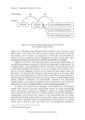
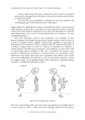
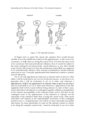
Show Chapter I. General Introduction to the Project: The Enterprise of Socratic Metaethics 32 truth at all. For these among other reasons, Rationalism defines the critical methodology adopted in this project. The argument proceeds by appeal to reasons and critical analysis, and most of the philosophers discussed here proceed similarly in defending their views - regardless of the substantive content of those views. 7. Rationality and the Structure of the Self The main focus of discussion in this project is with two competing branches of Rationalism, prevalent in mid- to late twentieth century AngloAmerican analytic philosophy, that differ with respect to the role each assigns to rationality in the structure of the self. Both branches agree upon the Socratic metaethical enterprise as a philosophical methodology. Both agree, as well, on the necessity of providing a metaethical conception of the subject as agent, as a foundation for making normative claims about what subjects as agents should do. And both agree upon the necessity of explaining what they think moves subjects as agents to act, and in what they think acting rationally consists. But each branch deploys different models of human motivation and rationality as the shared, weak metaethical premises on the basis of which to argue for these normative moral claims. The first branch is what I call the Humean conception of the self, the second the Kantian. Thus both Humean and Kantian conceptions in fact count as varieties of Rationalism according to this taxonomy, regardless of the Anti-Rationalist content some Humean views may have. 7.1. Two Conceptions of the Self By a conception of the self, I mean an explanatory theoretical model of the self that describes its dynamics and structure. A conception of the self is to be distinguished from a self-conception, which is the same as a "personal selfimage." The latter expresses the way or ways in which an individual thinks of himself, for example, as nice, well-intentioned, grumpy, loyal, fastidious, etc. It typically plays a normative role in individual psychology: We try to live up to the ideal individual we conceive ourselves to be, and regard negative attributes as flaws or deviations from that ideal. Thus a self-conception is part of one's normative moral theory. By contrast, a conception of the self plays a descriptive, metaethical role in moral theory: It identifies and describes the kind of individual to whom the theory purports to apply. For example, a normative moral theory that urges general conformity to the Golden Rule on the metaethical grounds that it best enables each individual to promote her self-interest implicitly identifies those individuals to whom the theory is addressed as desiring to promote their self-interest. Similarly, a normative moral theory that recommends actions governed by the dictates of reason metaethically presupposes reason as a significant motivational factor in the relevant agents. © Adrian Piper Research Archive Foundation Berlin |