| OCR Text |
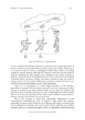
Show Rationality and the Structure of the Self, Volume I: The Humean Conception 75 Such a being might act systematically to satisfy its desires, without, however, representing the objects of those desires to itself. Following Frankfurt's terminology, we might describe such a being as a blind wanton. But it is hard to see such a condition as either possible or, so to speak, desirable for human agents. The heteronymous perspective on the present state of the self is remote without being detached because this perspective remains a personal and subjective one, constricted and defined by the desires, expectations and hopes that simultaneously define that individual self. It regards what I am, have and lack from the point of view of what I want, not from any independent point of view from which what I want itself might be critically assessed. This is something like tunnel vision: We regard our present state of insufficiency from a point further ahead in a temporally linear future, at which sufficiency has been restored by acquisition of the desired object. But since on the Humean conception of the self, we evaluate all perceptually available objects, events, and states of affairs from the perspective of their suitability to restore what we lack and not merely those on which we finally settle as objects of desire, the perspective is actually shaped more like a funnel: circumscribed, to be sure, by those states of affairs that satisfy the criterion of perceptual salience - i.e. seen as opportunities or setbacks to varying degrees; but narrowing at the location point of the agent and fanning out to encompass and evaluate the entire array of such possible objects, events and states of affairs within the agent's purview as desirable or aversive, as enhancing or as undermining the agent's wholeness and sufficiency. So the Humean self is also egocentric in the sense that it carves up the internal and external world of actual and possible states of affairs in terms of their satisfaction-potential in the eyes of one particular agent, namely itself. I am motivated to satisfy some desire only if the satisfaction in question is mine. If the desire belongs to someone else, then I am motivated to satisfy it only if I have a further desire I might thereby satisfy: i.e. to satisfy her desire. I argue in Chapter VI.1 that this is not to claim that all the desires I am moved to satisfy are inherently egoistic.22 I may be moved to satisfy my desire to advance the common good, even at considerable personal disadvantage, by the prospect of advancing the common good, not by that of personal satisfaction. Nevertheless, advancing the common good must be satisfying to me; otherwise I have no motivation for advancing it. Thus on this conception of the self, that I merely perceive some state of affairs to best contribute to the common good, or to satisfy someone else's desire, is not sufficient to motivate me to try to achieve it. In addition, I must have a desire to so contribute. For in the absence of such a desire, I have no motivation to contribute. Bernard Williams also argues this in "Egoism and Altruism," Problems of the Self (New York, NY: Cambridge University Press, 1975). 22 © Adrian Piper Research Archive Foundation Berlin |