| OCR Text |
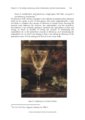
Show Rationality and the Structure of the Self, Volume I: The Humean Conception 103 we minimize the expenditure of resources in its service, irrespective of other substantive ends we may have. The requirement to do this can be understood as following naturally from two weak assumptions: (1) that resources are limited; and (2) we have other ends. But even in a case in which both of these assumptions were false, i.e. in which an agent had just one end - for example, making money - and more than sufficient resources for achieving it, he would still have reason to minimize their expenditure. For the one end he had might still require adopting and achieving subsidiary or instrumental ends in order to achieve that one. Squandering resources on one part of his overall action plan might well leave him unable or less well equipped to bring about the others. More than sufficient resources are not the same as infinite resources, so he would still have to trade off their expenditure on some of his instrumental ends against their availability for achieving others. So minimizing expenditures in order to maximize achievement would be rational whether (1) 11 and (2) held or not. In either case, this concept of efficiency is roughly 12 interchangeable with that of utility-maximization. For example, dissecting the gluttonous spending patterns of the United States military by contrast with the deeply acculturated thrift of its declining manufacturing industry, Jane Jacobs remarks about industrial engineers that they are "major antagonists of waste and inefficiency … [t]heir objects are to 13 maximize efficiency and minimize costs." Similarly, the Waterford Crystal Company claims (unpersuasively) to repudiate efficiency in this sense by announcing that At Waterford, we take 1,120 times longer than necessary to create a glass. While a machine can churn one out in only 45 seconds, we take over 14 11 For this formulation of the argument, and at many points in this chapter I am grateful to Ned McClennen (Personal Communication, July 9, 1991), and to his Rationality and Dynamic Choice: Foundational Explorations (New York: Cambridge University Press, 1990), from which I have learned a great deal. I discuss the significance of McClennen's concept of resolute choice in Volume II, Chapter IV. 12 Pace Harsanyi, who complains that "the means-end concept of rational behavior is too narrow because ... it restricts rational behavior to a choice among alternative means to a given end, and fails to include a rational choice among alternative ends" ("Advances in Understanding Rational Behavior," in John Harsanyi, Essays on Ethics, Social Behavior, and Scientific Explanation (Dordrecht: D. Reidel, 1976), 93. Harsanyi's criticism seems to ignore the ontological insecurity of the distinction between means and ends: Means or resources to achieve our final ends are themselves instrumental ends, and the mutual adjustment of final ends so as to preserve coherence and ensure their achievement is itself a means of maximizing utility. The discussion of opportunity costs that follows Harsanyi's criticism illustrates nicely the essential equivalence of efficiency-talk, costbenefit-talk, and utility-maximization talk. 13 Jane Jacobs, Systems of Survival: A Dialogue on the Moral Foundations of Commerce and Politics (New York: Random House, 1992). © Adrian Piper Research Archive Foundation Berlin |