| OCR Text |
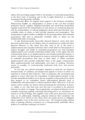
Show Chapter VII. Nagel's Internalism 270 us I happen to be. These interests acquire objective validity - and thereby, rational inescapability - because their status as a reason for me to act is not diminished by the priority I subjectively accord to my own. It is the combination of these three elements that rationally compel me to action: At the moment I spy the wasp alighting on your hamburger, my own concerns recede into the background. The thought that you may bite down on it occupies my attention totally, and the necessity I feel of preventing you from doing so feels overwhelming and unquestionable. According to Nagel, this is because I impersonally recognize your interests as just as real, vivid and worthy of promotion as my own. But may it not also happen, when I am feeling vulnerable and assaulted by the reality of my situation, that this vivid reality impels me to wince and withdraw into solitude or privacy? In fact, does it not often happen that we feel assaulted, overloaded, overwhelmed and even exploited and manipulated by vivid awareness of another's need, misfortune, or imminent danger? In such cases, my self-conception as one among many equally real individuals may cause me to feel invaded, and to restrict or muffle rather than respond to the reality of the other. The worry then surfaces that despite the rational content of this self-conception, my actions may depend on other psychological events only contingently connected with it that may diminish or subvert its motivational influence on me. In order to show that altruism is a rational requirement on action, Nagel eventually will need to put all of these worries to rest. 2. Prudence 2.1. Transpersonal Rationality and Action Altruistic reasons, as Nagel points out, are parasitic on self-interested ones: In order for me to act to benefit your interests, you must already have such interests. So, Nagel reasons, the form of altruistic reasons for action will depend on the form of prudential ones. Therefore, an answer to the prudential question of whether our future interests provide us with present reasons to secure them, should precede the answer to the altruistic question of whether others' interests provide us with our own reason to secure them. Nagel's first task, then, will be to show that our own future interests give us rational motives for present action to secure them, without any temporally intermediate or present desires interposed between them. But the metaphysical analogy Nagel proposes between altruism and prudence has even broader ramifications than this. In defending both altruism and prudence, Nagel implicitly rejects two defining elements in the Humean conception of the self. The first has to do with my spatial relation, as a bounded three-dimensional subject, to other discrete subjects who inhabit the same space. To whose interests should I give priority? Does the spatial © Adrian Piper Research Archive Foundation Berlin |