| OCR Text |
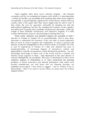
Show Rationality and the Structure of the Self, Volume I: The Humean Conception 233 1.1. Personal vs. Impersonal Desire A Humean may attempt to evade this conclusion by claiming that otherdirected desires such as benevolence or (on one analysis) compassion are impersonal rather than personal desires. An impersonal desire would be one whose object is desired independently of any personal relation it or its realization might or might not bear to the agent who desires it. However, even to state the definition reveals its incoherence. If the agent does indeed desire that object, then it necessarily bears a personal relation to the agent as that which satisfies that agent's desire. Of course the agent might not know that the object of his desire has been satisfied; or might not be instrumental in realizing the object of his desire. But that the agent bears no epistemic or causal relation to the object of his desire does not imply that he bears no such personal relation. If I desire that American white supremacist youth groups see the error of their ways, then if they do, my desire is satisfied even if I have not yet learned of it. And if I have, then I will be personally satisfied even if I had nothing to do with bringing this desired consequence about. Thus any desire an agent has is a personal one, including altruistic desire. Any such desire is personal rather than impersonal because it compels the subject's attention to her own state of personal insufficiency (or, literally, want) in relation to an envisioned object she desires; that is part of what motivates her to ameliorate this insufficiency by acting to satisfy the desire. This is true whether the object of desire is a jelly doughnut, the alleviation of another's pain, or ascertaining once and for all the age of the universe. In all of these cases, the desire draws one's attention to something that is missing (or wanting) in one's present state: the taste of a sweet, sticky pastry, or the awareness of another's restored comfort, or the knowledge of an important fact, respectively. So in all such cases, the experience of desiring thereby grounds an agent's point of view in a relation between his personal awareness of his present condition at a certain time and place at which the desire occurs, and an envisioned state of affairs that he locates at a future time and place at which his desire is satisfied. Desires and their objects situate us as agents in a comprehensive space-time matrix at two or more points which we traverse through the actions we take in order to realize them. Desires always embed us - and sometimes trap us - in the personal point of view. That is why, regardless of their content, they can cloud or bias our attempts at impersonal, impartial, or objective - i.e. transpersonal - judgment. I described this condition in Chapter II as "funnel vision." 1.2. Other-Direction Humeans might concede that all desires are personal, yet deny that satisfying other-directed desire is a species of self-interested motivation. They might say that if it is the other-directed object of desire itself, and not the © Adrian Piper Research Archive Foundation Berlin |