| OCR Text |
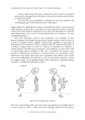
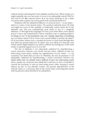
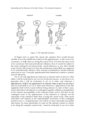
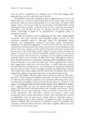
Show Rationality and the Structure of the Self, Volume I: The Humean Conception 115 Sylvester clearly fails to achieve that meta-end, if any action can. If no action can, then the vacuity of that meta-end follows immediately. The notion of a coherence set of ends organized to maximize utility overall is defective as a universal criterion of rationality, because it assumes that we can always make an ordinal trade-off between those ends the achievement of which maximize utility and others whose utility costs are too great. But this assumption is false. Ends that are discarded from the coherence set on grounds of inferior utility do not necessarily disappear, if their qualitative character is sufficiently compelling. They may remain sources of intense longing and regret - intense enough to motivate action in their service, without upsetting the original ordering of the set. Indeed, their qualitative importance may increase, even as their ordinal rankings decrease. Therefore, an agent may rationally choose to forego utility-maximization for the sake of those ordinally inferior but qualitatively compelling ends, if they are compelling enough. To reply that an end that is sufficiently qualitatively compelling to motivate action must be ordinally overriding as well merely repeats the error of reasoning I am targeting, for it begs the question of whether or not qualitative superiority is reducible to ordinal superiority. Sylvester's choices suggest that it is not. Thus an agent may choose rationally to live in a way that fails to maximize utility, and to accept his consequent unhappiness or dissatisfaction, if other considerations - for example, giving expression to his deepest impulses - are more qualitatively important (not: "more satisfying") to him. To then retort that if these other considerations really are more important to him then he has maximized utility after all is revert to the vacuous single-end interpretation of (U), in which any action one performs maximizes utility by definition. The vacuity of the coherence set can be avoided only by denying its 20 universality. 20 H. A. Simon's modifications of the utility-maximization model of rationality (op. cit. Note 8) seem to me unsuccessful in circumventing the worries I have raised because, unlike Liebenstein's theory of "selective rationality" (op. cit. Note 8) which attempts to reformulate (U) in terms of a basic concept of "trying" or "effort", Simon's notion of "satisficing" is equally susceptible to the charge of vacuity. Indeed Simon comes close to acknowledging as much when, in discussing changes in an agent's "aspiration level" as definitive of a satisfactory alternative, he states that "[s]uch changes in aspiration level would tend to bring about a 'near-uniqueness' of the satisfactory solution and would also tend to guarantee the existence of satisfactory solutions. For the failure to discover a solution would depress the aspirational level and bring satisfactory solutions into existence." (italics added; "A Behavioral Model of Rational Choice," 111) Simon's satisficing agent would seem to be incapable of frustration, disappointment, or fear of failure. In fact her dissatisfaction level would be so low, and her contentment level so easily reached, that her motivation for acting in any way at all is obscure. © Adrian Piper Research Archive Foundation Berlin |