| OCR Text |
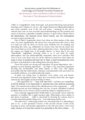
Show Anonymous Praise for Rationality and the Structure of the Self, Volume I: The Humean Conception 506 publish only the first, without the second, would be a serious loss to philosophy. "But that would double what is already far too long!" I can hear Cambridge saying perhaps with horror. I disagree about the first volume and indeed about the pair of them. …[N]othing is out of place, repetitious, boring. All of the philosophers and the detailed examination of their various views are well worth considering. As a whole, the work will be indispensable and it will be indispensable as a whole. It can be seen as a presentation and recapitulation of a good part of a serious and seriously good philosophical (of a serious and seriously good philosopher's) life. Who is the audience for this work? Just about every serious student (from undergraduate to professional) of ethics, self and action. It could easily (and should) be the substance of many philosophy courses. It is, in brief, a critical history - and a history that will be critical for the understanding - of the last several centuries of work in these fields. Are there already other works (competitors) covering this material? Of course there are. But none do it as well or as thoroughly. My overall view: Publish (and the other volume) and be lauded. We will be seriously and deeply grateful to Cambridge University Press. Thank you for letting me read this wonderful work. Rationality and the Structure of the Self is an ambitious project to examine and evaluate various positions advanced in late twentieth century moral philosophy in the Anglo-American analytic tradition around the contrast between what the author characterizes as the Humean and Kantian models of the self. The first volume represents the negative part of the project-a critical assessment of the major contributions to the tradition in so far as they assume and defend in different ways and to various degrees a commitment to the Humean model-whereas volume two (which I have not seen) promises to develop what the author proposes as a superior approach based on a Kantianinspired alternative. The writing is of a very high quality-executed clearly, engagingly and at times with a great deal of passion for the subject-and the author organizes and treats a wide sweep of work with great skill and an impressive scholarly command of the material. As far as I know, there is no work in the extant literature that compares with the proposed book or one that treats the tradition in terms of the thesis that the author advances and defends. In that respect, it is certainly an original piece of work and, given the persistent interest in moral philosophy, a timely contribution to the literature. …There are no doubt interpretive claims she makes that are controversial, especially as she confronts them all through her claim that they © Adrian Piper Research Archive Foundation Berlin |