| OCR Text |
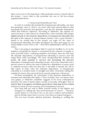
Show Chapter III. The Concept of a Genuine Preference Chapter II analyzed one particular intentional attitude - intention - in order to introduce a definition of subsentential constituents that includes among them nonsentential intentional objects. It also proposed some basic notational revisions to classical logic that enabled both their symbolic formulation and their subordination to its basic requirements. Preferences, like intentions, are intentional attitudes. They are also like intentions in being able to take nonsentential intentional objects that cannot be reduced to sentential formulation. My particular interest is in preference as this term is used in formal decision theory, to denote objects of rational choice. These are the objects that enter into pairwise comparisons and linear and nonlinear orderings. As we have seen in Volume I, Chapters III through VI, something can be an object of choice without being an object of desire. In fact, an object of intention can be, and usually is, such an object. This particular intentional attitude, which anchored the discussion of Chapter II, is an example - and for a Kantian conception of the self, the most important kind of example - of a preference that bears no necessary relation to desire. Therefore, the denotational scope of the term "preference" is not restricted to desire, or happiness, or satisfaction. Some preferences are intentions, some are resolves, some are desires, and some are ground projects or conceptions of the good. The term "preference" as I use it here covers all such nonsentential intentional objects. It would also cover sentential intentional objects of such attitudes, but those do not require our attention in this project. My aim is now to show in greater depth that these nonsentential preference objects similarly can be brought within the purview of classical logic's consistency requirements. Thus these notational revisions enable us to take up and resolve some of the issues left hanging in Volume I, Chapter IV.2 - 3. There I promised to explain the sense in which the Ramsey-Savage notion of transitive consistency is a special case of a more comprehensive principle of logical consistency; and therefore the sense in which formalizations of the utility-maximizing model of rationality similarly instantiate a more comprehensive Kantian model. In this chapter I attempt to make good on that promise. I show that preference objects, including but not limited to those which maximize the satisfaction of desire, must meet consistency requirements not to be found within the scope of the utility-maximizing model of rationality itself. In Section 1 I pose the problem for the utility-maximizing model of rationality: essentially that canonical decision theory lacks the technical and formal resources to state in what, exactly, the "inconsistency" of a cyclical ranking consists. I argue that the apparent insolubility of this problem lies in the inadequacy of canonical decision-theoretic notation, which since its |