| OCR Text |
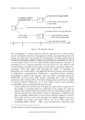
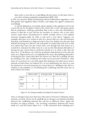
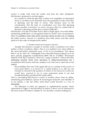
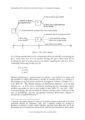
Show Rationality and the Structure of the Self, Volume II: A Kantian Conception 403 under similar circumstances. It may even be greater than previous victims of Vogeler's aggressions have expressed to him. Smith nevertheless has no basis for claiming that Washington's reaction is excessive. Minimizing the moral importance of Washington's pain is a pseudorational tactic that excludes that pain from the domain of Smith's moral theory. So a second criterion of selection for the most adequate moral theory among the alternatives might run as follows: (2) Recognition of Pain: A practically adequate moral theory K recognizes fully the moral importance to an agent of that agent's pain, as sincerely expressed in words or behavior. As with (1), (2) seems so obvious that, on reflection, it may be unclear why it is necessary to state it. A moral theory that prescribed disparaging, belittling or ignoring another agent's expression of pain, or was silent on the question of whether it was worth alleviating, would be no moral theory at all. Richard Miller offers a putative counterexample in the Yanomamo,11 but I am not convinced by his account that even the Yanomamo regard it as morally right to shoot their wives in the thigh for being too slow with the dinner, much less that we should accept this. Miller's defense of this thesis is based on the unquestioned extension of linguistic practices unproblematic among Yanomamo men to cases that are clearly problematic for Yanomamo wives - as though the victims of a punitive social practice should have no voice in evaluating its moral legitimacy. Moreover, Miller furnishes no substantive criterion for identifying a moral theory, or for distinguishing it from mere social or psychological conventions. Let me suggest an obvious one: A moral theory must, at the very least, provide a solution to Prisoner's Dilemma-type situations, which the Yanomamo convention of fierceness does not. For example, it decimates 25% of Yanomamo tribesmen and incapacitates Yanomamo wives from getting the dinner at all. A moment's thought will suffice to see that the point generalizes to any social convention of generally disregarding other agents' pain. It is rather for Miller to explain why we should identify a self-defeating social convention as a moral one; and why in particular the principle of disparaging, belittling or ignoring another agent's pain should enjoy moral legitimacy when no serious moral theorist would prescribe such a principle. Yet the foregoing hypothetical case combines elements of behavior that are all too familiar in a variety of social contexts, and that are implicitly assumed to be entirely consistent with a variety of standards of moral Richard Miller, "Ways of Moral Learning," The Philosophical Review XCIV, 4 (October 1985), 507-556). More recently, questions have been raised about the fidelity of canonical anthropological accounts of the Yanomamo. But this does not affect their philosophical interest, even if we must relegate these accounts to the hypothetical or fantastic. 11 © Adrian Piper Research Archive Foundation Berlin |