| OCR Text |
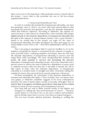
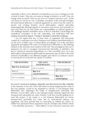
Show Chapter III. The Concept of a Genuine Preference 110 us to recognize a cyclical ranking as a logical possibility outside a normative decision-theoretic formalization is the more inclusive, background constraints of classical logic that define what a logical possibility is. These more inclusive background constraints define the outer limits not only of axiom systems of classical logic. As I tried to show in the preceding chapter, they define the outer limits of our experience of empirical reality as well. We do not need to study an axiom system in order to be quite certain that it is not logically possible for both P and not-P to be true at the same time in the same respect, because the horizontal and vertical consistency of our experience itself ensures this. Since (1) does not assert that both F and not-F, (1) appears to be logically possible. What we lack is a decision-theoretic version of this "reality test" to establish symbolically what we intuitively already know with equal certainty: that in fact it is no more logically possible for an agent to prefer F to H and H to F at the same time in the same respect than it is for both P and notP to be true at the same time in the same respect. The horizontal and vertical consistency of our experience excludes both. A decision-theoretic notation that enables us to symbolize the former as an instance of classical logic's symbolization of the latter does not seem too much to ask. The disanalogy between classical logic and normative decision theory carries through to agent behavior, where it continues to work to the disadvantage of the latter. When a subject sequentially asserts that P and then asserts that not-P, we credit her with intertemporal logical consistency by inferring, in accordance with the principle of charity, that she has changed her mind. Or we may infer - less charitably - that she is speaking irrationally. Neither the authority, the legitimacy, nor the scope of classical logic are threatened by these inferences, because the constraints on reality that classical logic mirrors themselves force the conclusion that the agent must have misspoken - rather than that the logic must be revised. By contrast, we have already seen in Volume I, Chapter IV.2 - 3 that when an agent sequentially selects F>G, G>H, and H>F, we have two analogous options, neither of which is comparably benign in its effects. First, we can save the rationality of the ranking by similarly applying the principle of charity - which immediately uncovers the vacuity of the underlying principle of utility-maximization (U). Second, we can attempt to make the inference to irrationality - only to be thwarted once again by the "universality" (actually the promiscuity) of (U)'s scope of application: if this is the ranking that maximizes utility for this agent, then there is nothing irrational about it. Both of these options do threaten the authority, legitimacy and scope of (U) in its unreconstructed form, because (U) fails to mirror any particular reality constraints. This is what it means to call (U) vacuous, or promiscuous in its scope of application; and what makes the case for revising its logic. © Adrian Piper Research Archive Foundation Berlin |