| OCR Text |
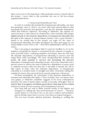
Show Rationality and the Structure of the Self, Volume II: A Kantian Conception 327 But the same vigilance and self-protectiveness that leads the self-deceiver so strenuously to avoid self-knowledge leads her to value it all the more. For of course her pseudorational self-conception would become a source of intense humiliation to her, if it were revealed to be false: The revelation that one is not as nice, smart, or popular as one thought is a shaming experience, in which one's deficiencies are exposed to the ridicule of the cruelest and most unsympathetic spectator of all. To avoid this revelation, one must be either very humble on principle, like Uriah Heep, very vigilant, like St. Augustine, or, like the self-deceiver, very resourceful in one's commitment to truth. As Sigismond's case suggests, self-deception, and pseudorationality more generally, requires energy, perseverance, an inquiring mind, a good grasp of the data, and a deep desire for epistemic rectitude. In order to avoid the humiliation of self-discovery, the self-deceiver needs not only to excise the damaging evidence that portends it; but also to believe that the pseudorational mechanisms by which she does so themselves rather bespeak her honesty, sincerity, and perspicacity. Her pseudorational self-conception, then, provides not only a source of bogus value for the self-deceiver, but also the illusion of a limited but impregnable scope of personal infallibility that enhances it. Thus may self-reflection and a commitment to truth supply a pseudorational disguise for the self-deceiver. This is what I meant when I suggested, at the beginning of this chapter, that the self-deceiver would rather be right than rational. Now against such self-deception, as well as other forms of pseudorationality, philosophers of a Humean persuasion, such as Sidgwick, Rawls, Brandt, and of course, Hume himself6 have urged a palliative, i.e. vivid reflection on the relevant data in a calm and composed setting. But if the mechanisms of pseudorationality function as I have suggested, the Humean palliative may in many cases amount to little more than ineffectual bootstrappulling. For the whole point of exercising our pseudorational resources is to restrict what counts as relevant data to the psychologically and theoretically palatable. If the self-deceiver, and the pseudorational agent more generally, had appropriate conceptual access to these data in the first place, vivid reflection on them would be unnecessary. For the self-deceiver, vivid reflection on the relevant data is an occasion for pseudorationality, not an antidote to it. See David Hume, A Treatise of Human Nature, Ed. L. A. Selby-Bigge (Oxford: The Clarendon Press, 1968), Book III, Section III, p. 603; John Rawls, A Theory of Justice (Cambridge, Mass.: Harvard University Press, 1971), Chapter VII, Section 64, p. 417; and Richard Brandt, A Theory of the Good and the Right (New York: Oxford University Press, 1979), Chapter I.1, pp. 11-13; Chapter VI, 111-113. 6 © Adrian Piper Research Archive Foundation Berlin |