| OCR Text |
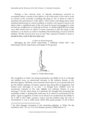
Show Rationality and the Structure of the Self, Volume II: A Kantian Conception 297 concept, to denote subsumption of some lower-order particular under a higher-order concept that classifies it along with others of its kind, and thereby renders it accessible to unified consciousness. Because recognition in this Kantian sense applies to subsentential constituents of sentences, rather than to the sentences in which they are embedded, it is a precondition of propositional knowledge rather than identical to it. Yet since its failure makes propositional knowledge impossible, it is appropriate to describe a failure of Kantian recognition of certain particulars as ignorance of those particulars in Aristotle's sense. In this case, you could not be said to experience the gray blob at all. If it is unclear whether any of the concepts constitutive of your current perspective would enable you to recognize this entity or not, then you can in fact neither identify this entity as of a kind with which you are already familiar, nor can you differentiate any such kind from it. The recalcitrance of this entity to identification in terms of the properties currently at your cognitive disposal calls into question all the concepts that form your current perspective: If they do not clearly fail to identify this entity, neither can they clearly succeed in identifying any other. So if you cannot now ascertain whether this entity is a street sculpture, three-martini lunch hallucination, or tropical plant, you cannot ascertain whether it is a gray blob or not, either; or whether, if it is not, anything else could be. This conclusion may seem to be too strong. Surely, it might be objected, it does not follow from the fact that you do not know what something is that you therefore do not know what anything is. Indeed it does not. But the preceding narrative does not address the question of what or how you know, nor even what propositional beliefs you have; but rather a presupposition of both of those questions. It addresses the question of whether, if you cannot successfully recognize something you experience in terms of the concepts at your disposal, you can successfully recognize anything else you encounter at the same time; and concludes that the answer is no. If you cannot recognize something in terms of the concepts at your disposal, you cannot identify it as having the properties of which you have those concepts. In this case, propositional beliefs about, and a fortiori propositional knowledge of that thing are impossible. Again it might be objected that it does not follow from the possibility that your identification of one thing is incorrect that your identification of everything else is called into question. Indeed it does not; yet again the objection misses the point. The preceding narrative does not address the question of whether your identification of something is correct or not - nor, therefore, the question of the fallibility of your other identifications; but rather a presupposition of both of those questions. It addresses the question of whether, if you fail to make something you experience rationally intelligible relative to everything else you experience at the same time, you can succeed © Adrian Piper Research Archive Foundation Berlin |