| OCR Text |
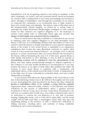
Show Chapter III. The Concept of a Genuine Preference 118 (VC) Fa [(∀x)(Fx Gx) Ga]. In fact we can do this, but not until Section 10, below. In order to see how (T) satisfies (VC), we need to forge the tools for seeing (T)'s logical structure more clearly than canonical decision-theoretic notation permits us to do. In the remainder of this chapter I try to make (T)'s logical status - and so that of the concept of a genuine preference - explicit, by reformulating Savage's concept of a simple ordering in such a way as to bring out (T)'s logical - i.e. horizontal and vertical - consistency and (C)'s violation thereof. To do this we need to re-examine and rethink Savage's now-canonical notation for pairwise comparisons. Savage's original notation began with the mathematical symbol "≤" defined as the "is not preferred to" relation; stipulated that "of any two acts f and g, f is not preferred to g or g is not preferred to f, possibly both;" defined a simple ordering among a set of elements x, y, z …, related by "≤" as equivalent to that which in addition satisfied transitivity; and proceeded to derive both the indifference relation (I) f ≤ g and g ≤ f and the "is preferred to" relation ">" in terms of it.5 An advantage of Savage's notation, in addition to its elegance, is that the move from expressing (T) in terms of his preference relation (T') If f > g and g > h, then f > h to the simple ordering (O) f > g > h is quick and obvious. The intuitive plausibility of Savage's notation depends, however, on regarding preference alternatives as numerically commensurable quantities, i.e. on the plausibility of f's being preferred to g because f is in some sense more than g; and g's being preferred to h because g is in the same sense (whatever that is) more than h. But this is too narrow. f's being in some sense more than g is only one possible basis on which f is preferred to g, and not the only or even a necessary basis. For example, a chooser might prefer f to g because f is according to some important criterion different from g. The "different from" relation would be equally capable of ordering multiple alternatives linearly. For example, f might be different from g according to 5 Ibid., 17-19. © Adrian Piper Research Archive Foundation Berlin |