| OCR Text |
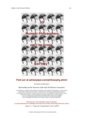
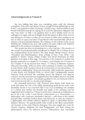
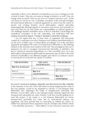
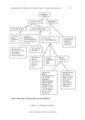
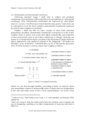
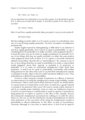
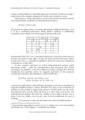
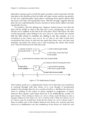
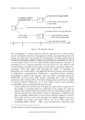
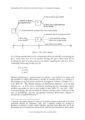
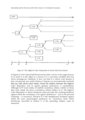
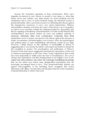
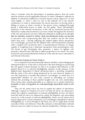
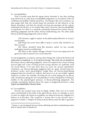
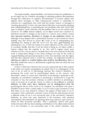
Show Preface to the Second Edition Rationality and the Structure of the Self has always had a curious history; indeed, 34 years' worth to completion. But those were relatively uneventful, compared to its publication history, which has only grown curiouser and curiouser. This fifth publication anniversary, marked by a reformatted and redesigned second edition, is an opportune moment to review and take stock. When Cynthia Read first solicited Rationality and the Structure of the Self for Oxford University Press in the early 1980s, it was a longish, one-volume manuscript that - as I predicted at the time - promised to grow. She apprised me of OUP's traditional sympathy for multi-volume projects (in recent years by Frances Myrna Kamm, Bimal Krishna Matilal, Alexander Murray, Werner Jaeger, Wayne Waxman, Terence Irwin and Derek Parfit, to name a few recent examples). So in the late 1990s, I kept my promise to get back in touch when it was close to completion. By then it had grown to four volumes. Peter Momtchiloff insisted that I cut it down to two. I did that. Then he insisted that I cut it down to one. I refused, and withdrew. Terry Moore of Cambridge University Press solicited Rationality and the Structure of the Self in the early 1990s. I brought it to CUP in the early 2000s, and stated at the outset my refusal to cut it any further. I worked with Beatrice Rehl. She was the best editor I could have wished. She understood and respected the interconnection of both volumes, the impossibility of marketing each as a completely independent work, and even my stubborn refusal to further reduce the size of either one. But Beatrice was even better than that. Because Volume I: The Humean Conception is very critical of a conception of the self that virtually everyone, both in philosophy and in the social sciences, takes for granted, it was extremely difficult to find reliable readers for this volume. More than thirty people simply refused to read it, and Beatrice refused to countenance the impertinent poster I designed in order to exploit the marketing potential of this remarkable fact (see Figure 1, next page). A few of my colleagues wrote reader's reports that were so mad-dog, chewing-up-the-rug savage that they subverted their own credibility. For example, one fulminated against its purported failings at very great length, without bothering in any instance to cite the text. Another fabricated objectionable text against which to fulminate, in the apparent certitude that Beatrice had not bothered to familiarize herself with the text I actually wrote. A third, so thinly disguised as not to have needed to bother with the pretense of anonymity, objected to my having neglected to discuss her recent book. Any other editor would have used such reports as a convenient excuse to get rid of Volume I entirely, and demand that I publish Volume II: A Kantian |