| OCR Text |
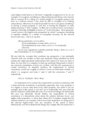
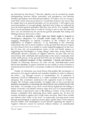
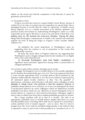
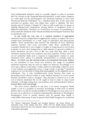
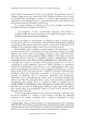
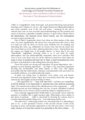
Show Chapter II. Reason in the Structure of the Self 78 (13a) I intend to go to the store and I intend not to go to the store. But (13a) does not imply (13): That I have two contradictory intentions does not imply that I intend a self-contradictory object. Hence (13) and (13a) cannot be equivalent. Alternately, we might try giving (13) the form (13b) I both intend that I go to the store and that I do not go to the store. But (13b) as it stands is ambiguous. If "both" modifies "intend," then (13b) is really a compound proposition that includes two "intend that" locutions with contradictory objects, thus: (13c) I both intend that I go to the store, and [intend] that I do not go to the store. Hence (13c) again expresses two contradictory intentions, not one intention with a self-contradictory object. On the other hand, if "both" in (13b) modifies "that," then (13b) is really (13d) I intend both that I go to the store and that I do not go to the store. (13d) expresses one intention with two mutually contradictory objects, not one intention with a single self-contradictory object. For unlike (13), (13d) contains two intentional objects the truth value of each of which is independent of the agent's attitude toward them - i.e. that I go to the store and that I do not. These are distinctions that HVTR is unsuited to make at the subsentential level. According to HVTR, the object of an intention is what follows the "intend that" locution, i.e. an atomic sentential proposition that comprises no further such propositions as constituents, or a compound sentential proposition that does ((13d) is of the latter kind). But in the weaker, ordinary sense, an object is merely a perceptually discriminable thing, i.e. anything that can be denoted by the subject term of a declarative categorical proposition. In this second, weaker sense of "object," a self-contradictory object is anything that can be denoted by a self-contradictory subject term, whether or not that subject is itself a compound sentential proposition. Thus, for example, we could rephrase (13) as (13e) To go to the store and not go to the store is what I intend. © Adrian Piper Research Archive Foundation Berlin |