| OCR Text |
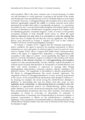
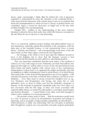
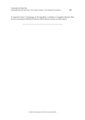
Show Rationality and the Structure of the Self, Volume II: A Kantian Conception 121 (4) (∀w)(∃x)Pwx But if (4) is a legitimate symbolic expression of (3), then (5) Everyone prefers some one alternative to some other can become (6) (∀w)(∃x)(∃y)Pwxy. Expressing preference relations among alternatives is thus far of a piece with expressing other intensional relations among objects in quantificational notation. This much alone easily expresses relations among the sentential propositions in which reference to these objects occur as subsentential constituents. But it suppresses the structure of relations among those subsentential constituents themselves. This structure is what distinguishes the preference relation from other triadic relational properties, including both extensional ones, such as being the offspring of one's parents, and other intensional ones such as admiring one's partner's mom. Moreover, we have already seen in the preceding chapter that the requirements of theoretical rationality apply to the subsentential constituent objects of intentional attitudes as well as to the sentential propositions in which those objects are embedded; and that these objects cannot always themselves be expanded into further sentential propositions. The same considerations apply when the intentional attitude in question is a preference. So, for example, the sentential proposition that (7) Gladys prefers rice and veggies to stir-fry is not logically equivalent to (8) Gladys prefers rice to stir-fry and Gladys prefers veggies to stirfry, since Gladys may prefer them to stir-fry only when they are combined. Similarly, that (9) Alonzo prefers charcoal to lead pencil is not logically equivalent to © Adrian Piper Research Archive Foundation Berlin |