| OCR Text |
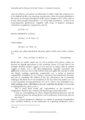
Show Rationality and the Structure of the Self, Volume II: A Kantian Conception 73 conceiving, etc. For example, it may be true that I believe in magic, though false that I believe that there is something that is magic, and true that I perceive a dagger before me, though false that I perceive that there is something that is a dagger before me. Similarly, it may be true that I am thinking of the situation in Africa, though false that I am thinking that the situation in Africa has some particular property; or true that I am thinking of the number 3, though false that I am thinking anything in particular about the number 3; and so on. These intentional objects are alike, in that they can have no truth value independent of the truth value of propositions that ascribe the corresponding intentional attitude to the agent. Call these agent-dependent intentional objects. The intimacy of the relation between the agent, her cognitive attitude, and the agent-dependent intentional object of that attitude is disregarded by any such sentential reformulation in the manner of (9). This is a significant oversight. An agent's ego or self is constituted, in part, by the cognitive and conative attitudes that define his conscious mental life. If all of those attitudes can take only intentional objects the truth values of which are independent of the agent's attitude toward them - call these agentindependent intentional objects, then none of the agent-dependent intentional objects just considered can constitute part of his mental life, nor, therefore, his sense of self. Nor can any of the agent's dreams, fantasies, disconnected memories, or free associations qualify, unless they can be formulated as propositions. But this flies in the face of the psychological facts. Those of our dreams, memories, ideas, fantasies, and free associations that are most difficult to express sententially are often most personal, self-revelatory, and intimately constitutive of our selves. Indeed, nonsentential intentional objects are psychologically primary. We learn the singular terms, predicates and phrases that refer to them long before we learn the syntactical rules of grammar that anchor them in objective reality. Childhood fantasy depends on their potential for free-floating, ungoverned and arbitrary interpermutability, which transgresses the constraints of reality that syntax imposes. To learn the rules of syntax is gradually to abandon the daytime experience of their arbitrary interpermutability, except at those liminal moments when the mind begins to relax its grip on external reality in preparation for sleep, and properties and particulars that the waking mind rigidly separates begin to meld, merge and recombine in ineffable variation. And the prelinguistic interpermutational quality of dreams defies one's subsequent attempts to capture them in language, the components of which may be subject to the same kind of displacement and arbitrary permutation. Thus sentential propositions themselves, and conventional grammar more generally, are inherently inadequate and unsuited to represent these most basic manifestations of the self. They are equally insensitive to the poetic and literary tropes in which those manifestations find creative expression. © Adrian Piper Research Archive Foundation Berlin |