| OCR Text |
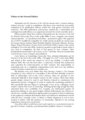
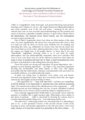
Show Rationality and the Structure of the Self, Volume II: A Kantian Conception 55 propositions, HVTR thereby situates it at a considerable remove from the kinds of factors - emotions, dispositions, desires, and so forth - we ordinarily recognize as capable of causal efficacy. It thus forecloses in advance the possibility that theoretical reason might be motivationally effective in behavior. At least it is difficult to imagine how anything so seemingly remote from causation could be. 1.1. Brandom's Inferentialism HVTR finds support in contemporary philosophy of language under the rubric of inferentialism, the decompositional, "top-down" view that sentences are the primitive carriers of semantic content, from which their embedded grammatical components derive their meaning. Sentences, in turn, derive theirs from their inferential and pragmatic interrelationships in the language that generates them. These inferential relationships among sentences thus determine the referential relations of their singular terms and predicates. This holistic (actually coherence) view of language is inspired by the later 4 Wittgenstein and by Quine, and is ably defended by Robert Brandom. On Brandom's view, the primary challenge is explain in what sense, if sentences are semantically primitive, the meanings of the subsentential expressions that constitute them can be understood. "How," he asks, "can a broadly inferential approach to semantic content be extended from the grammatical category of sentences, the only sort of expression directly involved in inference, to various subsentential categories such as singular terms and predicates?" (MIE 335). This challenge issues from representationalism, the compositional, "bottom-up" view that singular terms and predicates of sentences derive their meaning from the states of affairs in the world to which they refer; that sentences derive theirs from their components; and that a language comprises the sentences it has the capacity to generate. This contemporary correspondence theory of truth derives from Tarski, and its leading proponent 5 is Jerry Fodor. On this view, objects, properties and relations rather than propositional states of affairs are what are primarily represented. 4 See Robert Brandom, Making It Explicit: Reasoning, Representing, and Discursive Commitment (Cambridge, Mass.: Harvard University Press, 1994). Henceforth references to this work are paginated in the text in parentheses preceded by "MIE." Also see his Articulating Reasons: An Introduction to Inferentialism (Cambridge, Mass.: Harvard University Press, 2001). 5 See Jerry Fodor and Ernest Lepore, The Compositionality Papers (New York: Oxford University Press, 2002). In taking the position that only thought and not language is compositional, Fodor's "Language, Thought and Compositionality" (Mind & Language 16, 1 (February 2001), 1-15) raises a new host of questions that are beyond the scope of this discussion, so I leave it aside for present purposes. © Adrian Piper Research Archive Foundation Berlin |