| OCR Text |
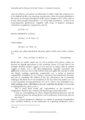
Show Rationality and the Structure of the Self, Volume II: A Kantian Conception 71 between action and will as does (2). Appending "this very intention" as the means in effect stipulates (2) as the means by which I achieve (2). This succeeds only in reiterating the problem at issue, by appending once more the very same gap. Or consider (5) I intend that I go to the store, such that my going to the store occurs because I intend to go to the store. (5) Closes the gap in (2) by stipulating (1) as its cause. But this does not show that (1) itself can be expanded into a sentential proposition. Nor does it show that (1) and (2) are equivalent; quite the contrary. It thus provides fuel for my argument, not for HVTR. All such substitutions suffer two general defects. First, credibility: agents do not ordinarily intend, in addition to everything else, that their behavior remain under the control of their own agency, even though it must in order for them to intend to do anything. Second, intentional fidelity: such extended and philosophically complex sentential analyses of the objects of intentional attitudes run aground on the commonsense objection that if such an analysis does not happen to capture what a particular agent claims sincerely to have had in mind, then either they by definition describe a different intentional attitude, or else need to be supplemented by an argument against even this kind of first-person authority. This should be kept in mind in the treatment of (9), below. Then if (1) and (2) are not semantically equivalent, not all objects of intentional attitudes themselves can be reformulated as sentential propositions. Call those that cannot nonsentential intentional objects. My first proposal may be put as follows: Proposal 1: Anything that may occupy the subject or predicate position in a sentential proposition that does not express an intentional attitude, such as, for example, (6) To go to the store is a tedious errand also may be a nonsentential intentional object, as is the subject of (6), "to go to the store," in (1). Here are some other examples of nonsentential intentional objects that singular terms might more conventionally denote: "the number 3" in (7) I am thinking of the number 3; "the situation in Africa" in (8) I am thinking of the situation in Africa; © Adrian Piper Research Archive Foundation Berlin |