| OCR Text |
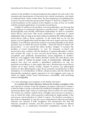
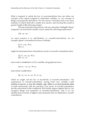
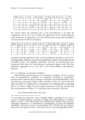
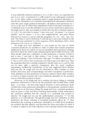
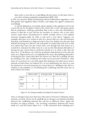
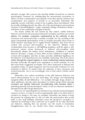
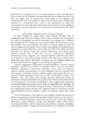
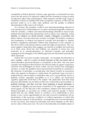
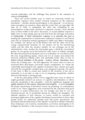
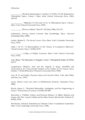
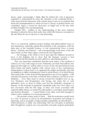
Show Chapter III. The Concept of a Genuine Preference {[Pw (x . ~y) . Pw (y 142 . ~z)] F Pw (x . F ~z)} F F F F F T We cannot. Since the left-hand side of the biconditional is T under all assignments, let us now try to make the right-hand side F, maintaining the same truth-value assignments as for the left-hand side, under the assumption of horizontal and vertical consistency: {[Pw (x F . ~y) . Pw (y . ~z)] F ~Pw F (z T . ~x)]} T T F F T It appears that the right-hand side of the biconditional also turns out T under all assignments. Hence so does the biconditional (3) itself. The transitivity and acyclicity axioms are logically equivalent. (2) and (3) demonstrate how occasional truth tables for subsentential constituents might work. With this additional apparatus let us now turn to the Jeffrey-Bolker representation theorem. 6.2.2. Is Indifference an Equivalence Relation? Jeffrey-Bolker decision theory solves Ramsey's problem, of how to move from non-quantitative conditions on preference rankings to quantitative functions that represent those rankings cardinally and probabilistically, using the following reasoning.18 Begin with a primitive notion of weak preference A≥B, such that A is preferred to or indifferent to B. Interpret this as meaning that A is at least as high as B in the agent's preference ordering. Assume that the weak preference relation "≥" is transitive and connected, such that (1) If A≥B and B≥C then A≥C, and In the following discussion I rely on Richard Jeffrey's exposition in The Logic of Decision, 2nd Edition (Chicago: University of Chicago Press, 1983), Chapter 9: "Existence: Bolker's Axioms." I have also learned from studying Ethan Bolker's terser and more demanding treatment in "A Simultaneous Axiomatization of Utility and Subjective Probability," Philosophy of Science 34, 4 (December 1967), 333-340; and "An Existence Theorem for the Logic of Decision," Philosophy of Science 67 (Proceedings 2000), S14-S17. 18 © Adrian Piper Research Archive Foundation Berlin |