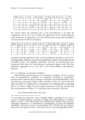
| OCR Text |
Show Rationality and the Structure of the Self, Volume II: A Kantian Conception 391 answered without imputation of wrongdoing. We begin to discover which moral theory we actually accept in practice when we settle the question of how to describe the acts on which it passes judgment. And we may sort moral theories into those that recognize and provide appropriate sanctions for certain kinds of acts, and those that recognize and provide sanctions for different ones. We may have to begin with morally neutral terms when these other questions are at issue. But we can end with them only when all of them have been resolved. This is not to claim that morally identifying an act is sufficient for identifying the particular moral theory that evaluates it. The data of moral experience is regularly overdetermined by the plethora of moral theories that may be invoked to explain it. For example, both Kantian and Utilitarian theories may prescribe promise-keeping, the first as an expression of respect for rational ends in themselves and the second as a dispensable means for maximizing happiness. Similarly, both theories may agree that killing, when neither for self-defense nor for defense of one's national borders under conditions of declared war, is murder. Any choice of an observational term is, however inherently theory-laden in itself, consistent with a variety of upperlevel theories that may succeed in giving it contextual coherence. 7 The term finally chosen may commit one only to an identifiable range of moral theories. All the theories in this range may concur in condemning, or praising, or acquitting the agent for a particular act. Yet they may differ as to the practical consequences of this condemnation, praise, or acquittal. For example, three different moral theories may agree that rape is morally blameworthy. Yet one may prescribe punishment and ostracism for the perpetrator, while another prescribes punishment and ostracism for the victim, and the third prescribes no punishment to anyone because other considerations always outweigh it. We may use our responses to such examples as a guide to solving the dilemma of which range of moral theories we should choose in order to identify the correct moral interpretation of a particular act, relying on detailed refinements in the case under study, and our responses to them, in order to narrow and sharpen the particular moral theory to which we ultimately find ourselves to be committed. In part this can be ascertained by measuring our willingness to act on the practical consequences of a particular moral interpretation the theory prescribes; this willingness is what distinguishes the whistle-blower from her co-workers. And in part it can be ascertained by gauging the explanatory power of the theory that results from excluding or including this interpretation in it. So, for example, we may discover our unwillingness to Of course the distinction between theoretical terms and observational terms can be ultimately only a matter of degree, rather than of kind, to the extent that it is valid at all. See Norwood Hanson, "Observation," in Richard Grandy, Ed. Theories and Observation in Science (Englewood, N.J.: Prentice-Hall, 1973), 129-146. 7 © Adrian Piper Research Archive Foundation Berlin |