| OCR Text |
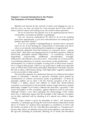
Show Rationality and the Structure of the Self, Volume II: A Kantian Conception 393 inclusiveness in subsuming under a moral rubric acts we often assume to be morally unremarkable in practice but that are rarely addressed in metaethical discussions of moral theory, we may be able to articulate a practically viable moral theory that can be distinguished both from an impractically idealistic one on the one hand, and from the frequent deviations from any such theory that regularly prod our conscience on the other. In settling on the morally appropriate terms in which to describe an act, we may discover not only the range of moral theories to which we actually subscribe, but also the particulars of our own personal investments in the issues under consideration. If we identify the act as a moral dereliction, condemnation or perhaps even some stronger intervention action may be called for, whereas if not, we are let off the moral hook. Being ever reluctant to assume the burden of moral responsibility, we may prefer to fiddle with the terms of our moral theory in the manner just described, in such a way as to allow us to see the act as morally innocuous, and hope that the case for that interpretation will stick. Thus, as we shall see, fixing on the correct verbal description of an act can be a case study in pseudorationality that ultimately yields its own moral strictures, for it requires us to distance ourselves from our personal investment in evading culpability - by resisting the temptation to deny clear evidence of wrongdoing, or to dissociate that evidence as irrelevant to the broader significance of the act, or to rationalize the subsumption of the act under less morally charged concepts. Even thinking about this issue in the abstract presents this difficulty, for we may find ourselves instinctively identifying or sympathizing with one or another agent involved, and this, together with our reluctance to encourage attributions of moral responsibility to ourselves, may influence our willingness to identify any as perpetrator or as victim. Consider, for example, the Viet Nam veteran who protested the rail transportation of chemical weapons across state lines by lying on a railroad track, and was then sued by the conductors of the train that cut off his legs, charging him with having caused them mental anguish. "Blaming the victim" is, in this as in other comparable cases - rape, wife-beating, child abuse, sexual harassment, for example, a misnomer; for to those instinctively allied with the instigator, it is obviously not the victim who is being blamed. In this way, who counts as the victim and who as the perpetrator cannot be settled in advance of settling the question as to how the act itself is to be morally interpreted; and settling these questions in turn settles the further question of who, if anyone, is to be blamed. What is not settled thereby are the questions of just how blameworthy the perpetrator is judged to be, and what form any consequent punishment should take. Settling these further questions of comparative degree will help situate the act and the agent within a broader moral context in which other acts are weighted and evaluated in relation to this one. This process of inquiry, in turn, will help focus the boundaries and content of the particular moral theory we finally accept. © Adrian Piper Research Archive Foundation Berlin |