| OCR Text |
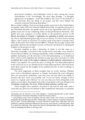
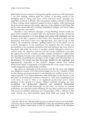
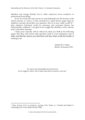
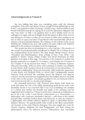
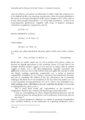
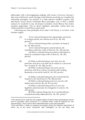
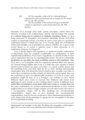
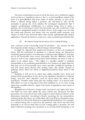
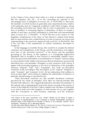
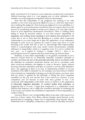
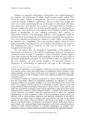
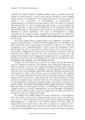
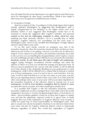
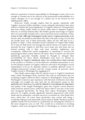
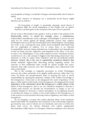
Show Rationality and the Structure of the Self, Volume II: A Kantian Conception 83 What is required to satisfy the law of noncontradiction here are rather our concepts of the objects assigned to individual variables, i.e. our concepts of things and properties themselves. For this reason, I introduce here a few basic elements of what I shall call a variable term calculus, and develop this model at greater length in the following chapter. Not just sentential propositions, but any rationally intelligible thing t assigned to an individual variable a must satisfy the following requirement: (15) ~(a.~a); we must conceive it as self-identical, i.e. nonself-contradictory. So, for example, Quine's schematized axioms of identity (I) Fx. x=y. Fy (II) x=x might be transformed into schematized axioms of nonself-contradiction, thus: (I') Fx. ~(x.~y). Fy (II') ~(x.~x) One result of substitution of (I') would be, along Quinean lines, (a) z=x. ~(x.~y). z=y from which would follow (b) ~(z.~x).~(x.~y). ~(z.~y), which we might call the law of transitivity of nonself-contradiction. The requirement of nonself-contradiction among terms and variables could function in proofs, as does the identity sign, either as an inert predicate letter or truth functionally with the insertion of an axiom of nonself-contradiction into the antecedent of the conditional. The holistic regress implies that we can recognize things and properties as nonself-contradictory only if we can identify them in terms of higher-order properties that are themselves nonselfcontradictory. © Adrian Piper Research Archive Foundation Berlin |