| OCR Text |
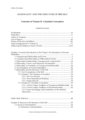
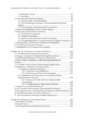
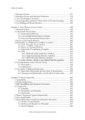
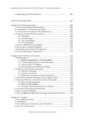
Show Rationality and the Structure of the Self, Volume II: A Kantian Conception 417 Relative to this broader Kantian conception, xenophobia is - like scientific resistance to natural phenomena untamed by theory - a special case of a perfectly general disposition to defend the self against anomalous informational assaults on its internal coherence, i.e. the highest-order disposition to literal self-preservation. Thomas Kuhn documents the form this resistance can take in the natural sciences: the inherent impediments to paradigm shift, the conservatism and constitutional insensitivity to the significance of new data, and the resistance to revising deeply entrenched theories in light of experimental anomaly that are all by-products of scientific method and professional practice.1 In a similar manner, an agent who is personally invested in a provincial moral theory views as morally anomalous another agent who violates her correspondingly provincial conception of how moral agents should behave or appear, and reacts to that violation xenophobically. So on the analysis I offer here, xenophobia is fear, not of strangers generally, but rather of a certain kind of stranger, namely the kind who does not conform to one's preconceptions about how persons are supposed to look or behave. It is a response to a very specific kind of thirdpersonal moral anomaly: not the kind that violates a principle of right conduct a moral theory prescribes; but rather the kind that violates unspoken empirical preconceptions about the kind of agent who is legitimately held to that principle in the first place. Xenophobia is first and foremost a reaction to self-generated appearances rather than to independent realities. Section 1 sketches an alternative analysis of xenophobia, which I call the Marxist analysis, against which I contrast and highlight my own. Section 2 gives an overview of that Kantian analysis of xenophobia, and situates it within the analysis of pseudorationality offered in Chapters VII and VIII. Section 3 bears down on the details of this analysis with regard to its precedent in Kant, and describes three constitutive errors of cognitive discrimination, in terms appropriated more or less directly from The Critique of Pure Reason. Section 4 offers the fourth and final test case for my analysis of pseudorationality, namely political discrimination, and a detailed analysis of its functioning. Section 5 derives from the Kantian conception of the self developed in earlier chapters two ways in which failures of cognitive discrimination might function, the second of which is consistent with its corrigibility. Section 6 makes the case that Kant's own analysis of reason favors this second alternative, and implies an antidote to xenophobia in xenophilic curiosity about and interest in the unfamiliar. Section 7 discusses the arena of contemporary art as a training ground for cognitive discrimination in which the xenophilic impulse might be cultivated. Finally, Section 8 makes explicit the implications of my methodological individualism Thomas Kuhn, The Structure of Scientific Revolutions (Chicago: University of Chicago, 1971), Chapters VI-VIII. 1 © Adrian Piper Research Archive Foundation Berlin |